Ever wondered what goes on when the sun dips below the horizon? Or maybe you need to keep an eye on things when it’s pitch black? Flying a drone at night used to be a real challenge, but with advancements in camera technology, finding the best drone for night vision is now more achievable than ever! Whether you’re a hobbyist looking for nocturnal adventures, a professional needing surveillance capabilities, or just curious about wildlife after hours, dedicated night vision tech can open up a whole new world.
We’ve scoured the market to bring you a selection of top-notch options – from complete drones ready for low-light action to specialized cameras that can transform your existing setup. Let’s dive in and light up the night!
1. RunCam Night Eagle 3 Micro FPV Night Camera
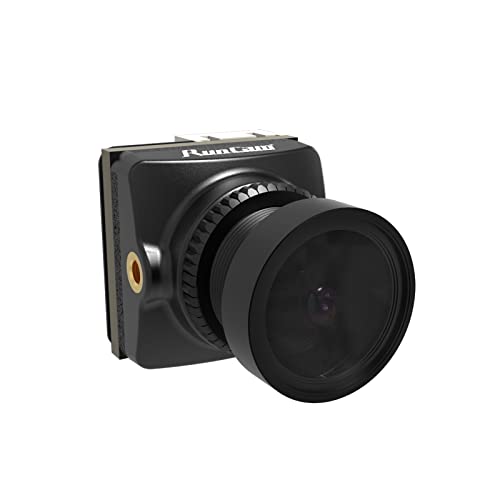
If you’re an FPV pilot who loves to fly after sundown, the RunCam Night Eagle 3 isn’t just a camera; it’s your ticket to an entirely new dimension of flight. This isn’t a drone itself, but a crucial component designed for FPV drones, making it a stellar choice for anyone building or upgrading their setup for true low-light performance. Its professional-grade starlight sensor is engineered to pick up even the faintest glimmer of light, delivering surprisingly clear images when most cameras would only show black. It’s truly a game-changer for night FPV.
Key Features:
– Professional Starlight Night FPV Camera with 0 back-illuminated Pixel technology and ultra-high sensitivity sensor.
– 11390 mV/Lux-sec starlight night vision effect for incredible low-light performance.
– 1000TVL resolution and WDR Video system for balanced footage.
– Switchable 16:9 and 4:3 screen formats.
– Integrated OSD to display battery voltage, pilot name, and timer.
– Ultra-low video latency of about 26.2ms.
– Supports Joystick Control and PAL / NTSC Switchable.
– Lightweight at just 8.5g.
Pros:
– Unmatched starlight night vision capability for FPV.
– Extremely low latency, ideal for fast FPV flying.
– High-definition 1000TVL resolution for clear visuals.
– Lightweight and compact, easy to integrate into FPV builds.
– OSD provides critical flight information.
Cons:
– Not a standalone drone; requires a drone build to function.
– Specifically designed for FPV racing/freestyle, less suited for cinematic shots.
– May require some technical know-how for installation.
User Impressions: FPV pilots absolutely rave about the Night Eagle 3’s ability to turn night into day, allowing them to continue their aerial acrobatics long after other cameras have given up. They particularly praise its low latency, which is crucial for responsive night flying.
2. OKYUK 1080P HD FPV Drone with Night Vision

For those looking for a complete drone package that handles well in low-light conditions and is packed with beginner-friendly features, the OKYUK 1080P HD FPV Drone is a fantastic option. While its “night vision” leans more towards enhanced low-light performance rather than dedicated infrared, it still offers a surprisingly clear perspective in dim environments. With its stable flight, easy controls, and decent camera, it’s a solid entry point for aspiring night pilots or simply for casual fun.
Key Features:
– Upgrade Brushless Motors for strong wind resistance, faster, quieter, and more powerful flight.
– Built-in altitude maintenance system for stable hovering.
– 1080P HD Wi-Fi camera with shock absorption and 150° electric remote control adjustment.
– Optical flow positioning camera for enhanced stability and detailed views.
– FPV transmission for live feed via APP control.
– Elevated omnidirectional obstacle avoidance for safer flights.
– Multiple exciting functions: 360° flips, 3 speeds, one-key takeoff/landing, altitude hold.
– Comes with 3 rechargeable batteries for up to 40-45 minutes total flight time.
– Over-current protection and low power alarm for safety.
Pros:
– Very user-friendly, ideal for beginners and ages 14+.
– Brushless motors offer stable and quiet flight.
– Good flight time with included extra batteries.
– Obstacle avoidance adds a layer of safety for night flying.
– 1080P camera provides decent live feed and recordings.
Cons:
– “Night Vision” is more of an enhanced low-light capability, not dedicated IR.
– 1080P resolution is good but not 4K.
– Control range might be limited compared to professional drones.
User Impressions: Customers appreciate how easy this drone is to fly, making it a great gift. They note its decent performance in low light for recreational use and the extended flight time as a major plus. The obstacle avoidance is also a big hit for beginners.
3. IR Night Vision Goggles for Adults (4K, Dual Infrared)

Alright, so this isn’t a drone, but hear us out! When you’re talking about the best drone for night vision, sometimes the best tool for the job is right on your head. These Night Vision Goggles from GYS are an incredible piece of kit for anyone involved in nocturnal activities, whether it’s wildlife observation, surveillance, or even search and rescue. They can perfectly complement your drone operations by allowing you to see in total darkness from the ground, spot targets, and guide your drone more effectively. Think of them as your personal ground-based night vision system to support your aerial missions.
Key Features:
– Starlight-grade CMOS sensor with 3 levels of infrared illumination and dual night vision modes.
– Unmatched clarity in pitch-black conditions for clear visuals.
– 3 inch HD screen and 8x digital zoom for seeing deeper and closer.
– 4K video recording and 40MP picture capabilities.
– Includes a 32GB memory card (expandable up to 512GB).
– Built-in 5000mAh lithium-ion battery offers up to 10 hours continuous use with IR on, or 16 hours without.
– IP65 waterproof design for all-weather use.
– Built-in tactical light with a special strobe function for distress signals.
Pros:
– Exceptional clarity and detail in total darkness with starlight sensor and IR.
– High-resolution 4K video and 40MP photos.
– Long battery life for extended night excursions.
– Durable, waterproof design (IP65).
– Useful 8x digital zoom and large viewing screen.
– Tactical light adds safety and utility.
Cons:
– Not a drone; for ground-based observation only.
– Another piece of equipment to carry.
– Can’t provide an aerial perspective.
User Impressions: Users are consistently impressed with the GYS goggles’ clarity and performance in complete darkness, often describing it as “seeing clearly in a cave.” The long battery life and rugged build also receive high marks from outdoor enthusiasts and security personnel alike.
4. Advanced 4K Drone with Infrared Night Vision & Obstacle Avoidance

Now, if you’re serious about finding a robust, full-featured drone capable of legitimate night flights, this 4K Drone with Camera is a strong contender. It explicitly boasts “Infrared Night Vision” alongside powerful 4K cameras and advanced safety features. This drone isn’t just for low-light; it’s designed to confidently navigate and capture stunning visuals in genuinely dim conditions, making it an excellent choice for night aerial photography, surveillance, or simply exploring the unseen. Its comprehensive obstacle avoidance system adds a crucial layer of safety for nocturnal missions.
Key Features:
– Powerful Brushless Motors for longer flight time, stable performance, and reduced noise.
– High-capacity battery for extended flight.
– 4-Way Obstacle Avoidance sensors on all sides plus altitude hold for safer flights.
– 4K UHD front camera with gimbal damping balls and EIS anti-shake technology.
– Bottom lens for multiple shooting angles.
– Dedicated Infrared Night Vision capability and adjustable LED lighting.
– Smart Flying Modes: one-key take-off/landing, headless mode, trajectory flight, 360° flips, gravity sensor control, face recognition auto-photo.
– Perfect for beginners and adults.
Pros:
– True infrared night vision for effective dark environment operation.
– Comprehensive 4-way obstacle avoidance, crucial for night flying.
– High-resolution 4K cameras with anti-shake technology.
– Long battery life and stable flight performance from brushless motors.
– User-friendly smart flying modes.
– Adjustable LED lighting for improved visibility and aesthetics.
Cons:
– Specific details on the IR night vision range or clarity could be more detailed.
– While advanced, it might not offer the same professional-grade image processing as very high-end drones.
User Impressions: Pilots love this drone for its balance of features, especially the obstacle avoidance which gives them peace of mind. The night vision capability is frequently highlighted as a standout feature, enabling them to capture unique footage in conditions previously impossible.
5. XF Z-1Mini 4K Full-Color AI Night Vision Camera with Gimbal
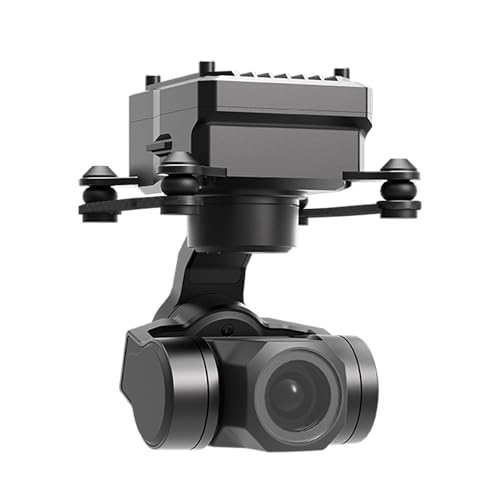
Last but certainly not least, we have another exceptional camera system that, while not a drone, is arguably one of the most advanced night vision components you could integrate into a professional drone setup. The XF Z-1Mini is a compact powerhouse featuring AI-enhanced full-color night vision. This isn’t just black and white IR; it’s designed to give you vibrant, true-to-life colors even in the darkest environments. Its AI-powered object detection and tracking, combined with a micro 3-axis gimbal, make it an ideal choice for serious surveillance, inspection, or specialized aerial robotics where precision and clarity are paramount.
Key Features:
– 4K camera with AI-ISP full-color night vision engine for clear, vibrant images in complete darkness.
– AI-Powered Multi-Object Detection & Tracking for people and vehicles.
– Micro 3-Axis Stabilized Gimbal (lightweight 69g) for rock-solid stabilization and versatile mounting.
– Versatile Control: network, UART, S.BUS, compatible with private protocols and MAVLink.
– Real-time image transmission via network or HDMI.
– Advanced Software Integration: seamless with Dragonfly software and customized QGC for open-source autopilots.
– OSD overlays for geolocation data (latitude, longitude, altitude) and EXIF image coordinates.
Pros:
– Groundbreaking AI-enhanced full-color night vision.
– Advanced AI object detection and tracking capabilities.
– Professional-grade 3-axis gimbal for superior stability.
– Highly versatile for integration into various drone and robotic platforms.
– Real-time image transmission and comprehensive software integration.
– Excellent 4K resolution.
Cons:
– Not a complete drone; requires professional integration.
– Designed for advanced users or custom builds.
– Higher cost due to specialized technology.
User Impressions: Professionals and drone builders are deeply impressed by the Z-1Mini’s cutting-edge technology, particularly its full-color night vision and AI tracking. They find it invaluable for specialized applications where high-fidelity night imaging and object recognition are critical.
FAQ Section: All Your Night Vision Drone Questions Answered
Finding the best drone for night vision can be tricky, so let’s clear up some common questions.
Q1: What exactly does “night vision” mean on a drone?
A: “Night vision” on a drone typically refers to its ability to see in low-light or complete darkness. This is usually achieved through specialized cameras:
* Starlight Sensors: Highly sensitive cameras that amplify existing ambient light (like moonlight or distant streetlights) to produce a clear image, often in color or monochrome.
* Infrared (IR) Cameras: These drones use an infrared light emitter (invisible to the human eye) to “illuminate” the scene, and then an IR-sensitive camera captures the reflected light, producing a monochrome image.
* Thermal Cameras: While distinct from traditional night vision, thermal cameras detect heat signatures, allowing you to “see” objects based on their emitted heat, regardless of light. Not all drones with “night vision” have thermal.
Q2: Can I fly any drone at night?
A: Technically, you can fly many drones at night, but it’s often not advisable without proper equipment and preparation. Legally, many regions (like the FAA in the US) have specific rules for nighttime drone operations, often requiring anti-collision lighting, specific waivers, or certifications. Practically, without proper night vision or adequate lighting, you risk disorientation, collisions, and losing your drone.
Q3: What’s the difference between infrared (IR) and thermal imaging on drones?
A: IR night vision (like in product #4) works by illuminating a scene with infrared light and capturing its reflection. This is similar to how a flashlight works, just with invisible light. Thermal imaging, on the other hand, detects the heat emitted by objects. It doesn’t need any light source and can “see through” smoke or light fog. IR gives you a more traditional “image” based on light, while thermal shows you heat signatures.
Q4: Are drones with night vision expensive?
A: The cost varies widely. Basic drones with enhanced low-light cameras can be relatively affordable (a few hundred dollars). Drones with dedicated IR night vision, or those that can integrate advanced cameras like the RunCam or XF Z-1Mini, will generally be more expensive, ranging from several hundred to thousands of dollars, especially for professional-grade setups.
Q5: What should I look for when choosing the best drone for night vision?
A: Consider these factors:
* Camera Type: Starlight sensor, active IR, or thermal? What are your specific needs?
* Resolution: Higher TVL (for analog FPV) or 4K/1080P (for digital recording) means clearer images.
* Flight Stability: Crucial for night operations when visual cues are limited.
* Battery Life: Longer flight times are always better, especially for surveillance.
* Safety Features: Obstacle avoidance, GPS, and altitude hold are vital for night flying.
* Lighting: Onboard LED lights can help with orientation or illumination.
* Integration: If you’re looking at a camera component, how easy is it to integrate with your drone?
Q6: Is it safe to fly drones at night?
A: Flying at night carries inherent risks due to reduced visibility. Always prioritize safety by:
* Knowing your local drone regulations.
* Using bright anti-collision lights on your drone.
* Maintaining visual line of sight (VLOS) or using a spotter.
* Flying in familiar areas.
* Checking weather conditions thoroughly.
* Using a drone with robust safety features like GPS, obstacle avoidance, and reliable night vision.
Q7: Can these drones be used for security or surveillance?
A: Absolutely! Drones with night vision are increasingly used for security patrols, property monitoring, perimeter checks, and even search and rescue operations, especially when equipped with effective IR or thermal cameras. They offer a silent, elevated perspective that can cover large areas quickly.
Final Thoughts
Navigating the night skies with a drone opens up a world of possibilities, from capturing breathtaking low-light photography to providing critical surveillance. Whether you opt for a full drone package with built-in IR or decide to enhance your existing FPV rig with a starlight camera, the technology available today is truly impressive. Remember to consider your specific needs, skill level, and budget when picking the best drone for night vision for your adventures. Happy flying, even after dark!