Drones have revolutionized how we approach land surveying, construction monitoring, agriculture, and environmental management. With their ability to capture high-resolution aerial photography and georeferenced data, they’ve become indispensable tools for creating orthomosaics, 3D models, and topographic maps. When it comes to reliable and advanced drone technology, DJI stands out as a market leader. But with so many options, how do you find the best DJI drone for mapping your specific needs?
You’re in luck! We’ve dived deep into DJI’s impressive lineup to help you navigate the choices. Whether you’re a professional surveyor needing high-precision mapping, a farmer looking into precision agriculture, or a hobbyist interested in site inspection for small projects, there’s a DJI drone for you. Let’s explore the top contenders that make the cut, focusing on their camera capabilities, flight performance, and features relevant to data capture and aerial surveying.
1. DJI Mini 4K Camera Drone Combo, Drone with 4K UHD…

The DJI Mini 4K Combo is a fantastic entry point for anyone venturing into small-scale mapping or property inspection. What makes this drone stand out is its incredibly lightweight design, meaning you don’t need FAA registration for recreational use, making it super accessible. Don’t let its size fool you; it packs a crisp 4K UHD camera with a 3-axis gimbal, delivering stable and clear aerial imagery that’s perfect for basic data capture of smaller areas. It’s an affordable way to get your feet wet in drone photogrammetry.
-
Key Features:
- No Registration Needed (Under 249 g) for recreational use.
- 4K Ultra HD & 3-Axis Gimbal for cinematic-quality shooting.
- 38kph (Level 5) Wind Resistant for stable flight.
- 10km Max HD Video Transmission for clear views.
- Extended Battery Life (up to 93-min with 3-battery set).
- Beginner-Friendly with GPS Return to Home (RTH) and stable hovering.
- Intelligent QuickShots for automated video capture.
-
Pros:
- Extremely portable and easy to carry.
- Excellent for beginners with user-friendly controls.
- Good
4K image qualityfor its size and price. - Long flight time with multiple batteries in the combo.
-
Cons:
- Lacks advanced
mapping-specific featureslike waypoint missions (needs third-party apps). - Smaller sensor compared to professional mapping drones, affecting
detail capturein complex environments. - Not ideal for
large-area surveying.
- Lacks advanced
User Impressions: Customers love the Mini 4K for its ease of use and impressive camera quality for its size. Many beginners find it the perfect drone to learn on, appreciating the stable flight and clear footage for their casual aerial photography needs.
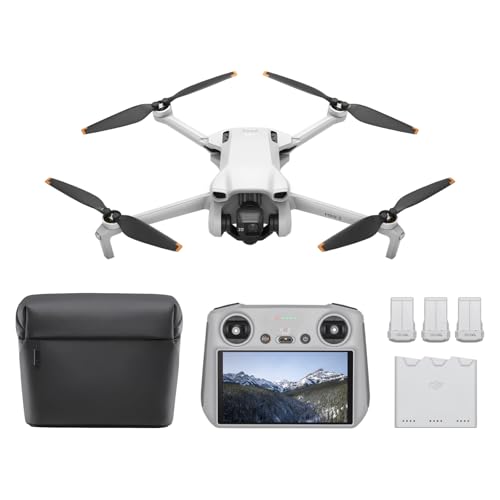
2. DJI Mini 3 Fly More Combo (DJI RC), Drones with…

The DJI Mini 3 Fly More Combo builds on the success of the Mini series, offering enhanced 4K HDR video and Dual Native ISO Fusion for even better image quality in varied lighting conditions – a huge plus for consistent data capture. Its unique True Vertical Shooting feature is a game-changer for inspecting tall structures or capturing specific assets for vertically oriented reports. With extended battery life and the included DJI RC, this drone offers a more comprehensive package for serious hobbyists or those doing more frequent small-scale mapping tasks.
-
Key Features:
- No Registration Needed (Under 249 g) for recreational use.
- 4K UHD Stunning Imagery with HDR Video and Dual Native ISO Fusion.
- Striking Vertical Videos with True Vertical Shooting.
- Extended Battery Life (up to 114 minutes total with combo).
- 38kph (Level 5) Wind Resistant and 3-Axis Gimbal for stable footage.
- 10km Max HD Video Transmission.
- Creative Features like QuickShots and Panorama.
- Beginner-Friendly with GPS RTH and Auto Takeoff/Landing.
- QuickTransfer via Wi-Fi.
- Includes DJI RC with built-in 5.5-inch HD display.
-
Pros:
- Superior
image qualitywith HDR and Dual Native ISO Fusion, improvingmapping data. True Vertical Shootingis valuable for certainasset inspections.- Excellent battery life for longer
data collectionsessions. - Dedicated DJI RC controller enhances user experience and visibility.
- Superior
-
Cons:
- Intelligent Flight Battery Plus makes it heavier than 249g, potentially requiring registration for some uses.
- Still primarily consumer-focused, lacking enterprise
mapping softwareintegrations. - Not designed for
high-precision photogrammetryover large areas.
User Impressions: Users rave about the Mini 3’s improved camera and battery life. The DJI RC is a particular highlight, making outdoor flying much more enjoyable and efficient for aerial reconnaissance.
3. DJI Mini 3 (DJI RC), Lightweight 3x Mechanical Gimbal…

This version of the DJI Mini 3 offers the same fantastic capabilities as the Fly More Combo but with a more streamlined package, typically including fewer accessories. It’s still a powerful tool for entry-level aerial mapping, providing superb 4K HDR video and excellent stability thanks to its 3-axis gimbal. If you’re looking for the core Mini 3 experience with the convenience of the DJI RC without needing extra batteries immediately, this is a solid choice for casual site monitoring or generating basic topographic maps.
-
Key Features:
- No Registration Needed (Under 249 g) for recreational use.
- 4K UHD Stunning Imagery with HDR Video and Dual Native ISO Fusion.
- Striking Vertical Videos with True Vertical Shooting.
- Extended Battery Life (up to 51 min with Intelligent Flight Battery Plus, sold separately).
- 38kph (Level 5) Wind Resistant and 3-Axis Gimbal for stable footage.
- 10km Max HD Video Transmission.
- Creative Features like QuickShots and Panorama.
- Beginner-Friendly with GPS RTH and Auto Takeoff/Landing.
- QuickTransfer via Wi-Fi.
- Includes DJI RC with built-in 5.5-inch HD display.
-
Pros:
- High-quality
4K HDR cameraideal fordetailed image capture. True Vertical Shootingfor specificinspection tasks.- DJI RC with a bright screen, great for
field operations. - Portable and easy to deploy for quick
aerial surveys.
- High-quality
-
Cons:
- Standard battery life might be limiting for
longer mapping missions. - Requires purchasing Intelligent Flight Battery Plus for extended flight time, increasing weight.
- Not designed for professional
geospatial data collection.
- Standard battery life might be limiting for
User Impressions: This bundle offers a great balance of features and cost. Users appreciate the direct screen on the DJI RC, eliminating the need for a phone and streamlining their aerial data collection process.
4. DJI Avata 2 Fly More Combo (3 Batteries), FPV Drones…

The DJI Avata 2 is a very different beast. While not a traditional photogrammetry drone due to its immersive FPV nature and wide 155° FOV, it excels in dynamic inspections and aerial reconnaissance where unique perspectives are key. Its built-in propeller guards make it incredibly robust and safe for navigating tight spaces, like industrial inspections or asset management in challenging environments. For creative data capture that’s less about orthomosaics and more about unique views, the Avata 2 is a thrill.
-
Key Features:
- Adrenaline-Pumping Immersive Flying with goggles.
- Intuitive Motion Control for effortless piloting.
- Easy ACRO for performing cinematic maneuvers.
- Tight Shots in Super-Wide 4K (4K/60fps, 155° FOV, 1/1.3-inch image sensor).
- Built-in Propeller Guard for enhanced safety and durability.
- Hassle-Free POV Content creation with LightCut app.
- FAA Remote ID Compliant.
- Includes DJI RC Motion 3, DJI Goggles 3, and 3 Intelligent Batteries.
-
Pros:
- Extremely agile for
close-up inspectionsin confined areas. Propeller guardsoffer safety when flying near structures.Immersive FPVexperience can reveal details missed by traditional drones.4K videoprovides high-quality visualdata capture.
- Extremely agile for
-
Cons:
155° FOVintroduces distortion, making it unsuitable for accuratephotogrammetryororthomosaic generation.- Motion control is intuitive but less precise for
automated mapping flight paths. - Primarily for cinematic/FPV, not designed for
geospatial dataaccuracy.
User Impressions: FPV enthusiasts absolutely love the Avata 2 for its immersive experience and robust design. While not a conventional mapping drone, users have found creative ways to use it for unique inspection videos and site walkthroughs.
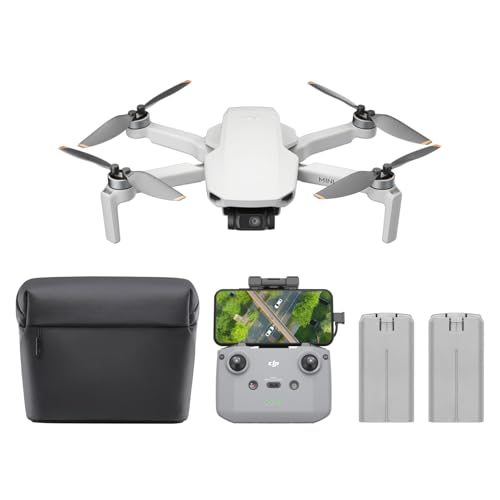
5. DJI Mini 4K Fly More Combo, Drone with 4K UHD…

This Fly More Combo for the DJI Mini 4K is essentially an upgraded version of the first product on our list, featuring an impressive three batteries and a two-way charging hub. For anyone interested in small-scale mapping or frequent site inspections, this significantly extended flight time is a game-changer. You’ll spend less time charging and more time capturing essential aerial data, making it a more practical choice for casual photogrammetry projects that require multiple flights.
-
Key Features:
- No Registration Needed (Under 249 g) for recreational use.
- 4K Ultra HD & 3-Axis Gimbal for cinematic-quality shooting.
- 38kph (Level 5) Wind Resistant for stable flight.
- 10km Max HD Video Transmission for clear views.
- Uninterrupted Creation with Extended Battery Life (up to 93-min total with 3 batteries).
- Beginner-Friendly with GPS Return to Home (RTH) and stable hovering.
- Intelligent QuickShots for automated video capture.
- Includes 3 batteries, two-way charging hub, and shoulder bag.
-
Pros:
- Significantly
extended flight timefor more comprehensivedata collection. - Highly portable and easy to use for beginners.
4K cameraprovides good visualdatafor smaller projects.- No FAA registration required for recreational use, simplifying deployment.
- Significantly
-
Cons:
- Still primarily a consumer drone, lacking advanced
mapping softwareintegration. - Smaller sensor limits
detail capturecompared to professional options. - Not suitable for
large-area surveyingorhigh-accuracy mapping.
- Still primarily a consumer drone, lacking advanced
User Impressions: The Fly More Combo is consistently praised for removing battery anxiety. Users find they can explore and capture much more, which is invaluable for repetitive inspection tasks or property documentation.
6. DJI Mini 4K, Drone with 4K UHD Camera for Adults,…
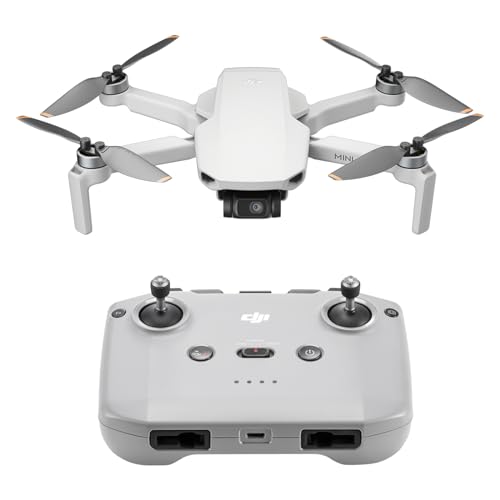
The base model of the DJI Mini 4K is perfect for absolute beginners or those on a very tight budget who still want to dabble in aerial imagery for basic site overviews. It includes one battery and the standard RC-N1C remote controller, providing all the essentials to get you airborne and capturing 4K UHD video. While its single battery limits flight time, it’s still an excellent, affordable tool to learn the ropes of drone photography and its potential for simple mapping applications.
-
Key Features:
- No Registration Needed (Under 249 g) for recreational use.
- 4K Ultra HD & 3-Axis Gimbal for cinematic-quality shooting.
- 38kph (Level 5) Wind Resistant for stable flight.
- Uninterrupted Creation with up to 31-min flight time (1 battery).
- Beginner-Friendly with GPS Return to Home (RTH) and stable hovering.
- Intelligent QuickShots for automated video capture.
- Includes DJI Mini 4K, 1 battery, and RC-N1C remote controller.
-
Pros:
- Most affordable entry into DJI’s
4K drone lineup. - Easy to fly and maintain, ideal for learning
aerial data collection. - Compact and lightweight, making it highly portable.
- Delivers solid
4K videofor basicvisual inspections.
- Most affordable entry into DJI’s
-
Cons:
- Limited flight time with just one battery, impacting
mapping efficiency. - Lacks advanced
mapping featuresand dedicatedflight planningtools. - Not suited for
professional mappingor large projects.
- Limited flight time with just one battery, impacting
User Impressions: Beginners find this model incredibly approachable and a great way to start. Despite the single battery, users are impressed with the camera’s capability for its price point, making it a viable option for initial site reconnaissance.
7. DJI Air 3S (RC-N3), Drone with Camera 4K, Dual-Camera…

Now we’re moving into more serious territory for the best DJI drone for mapping. The DJI Air 3S offers a significant leap with its 1" CMOS primary camera, delivering breathtaking shots with enriched detail, especially in challenging low-light conditions – crucial for consistent data capture. Its ability to record cinematic 4K/60fps HDR video with 14 stops of dynamic range means higher quality source data for photogrammetry and 3D modeling. Coupled with a 45-min max flight time and omnidirectional obstacle sensing, the Air 3S is a robust tool for more extensive aerial surveying and construction progress monitoring.
-
Key Features:
- Enhanced Camera for Travel Shots with 1″ CMOS primary camera.
- Capture Footage with Vibrant Detail: 4K/60fps HDR video with 14 stops dynamic range.
- Free Panorama Mode for seamless panoramic
data capture. - Safer Nighttime Flying with Forward-facing LiDAR and omnidirectional obstacle sensing.
- Next-Gen Smart Return-To-Home for optimal RTH route.
- Extended Flight (45-min max flight time) & Video Transmission (20km).
- Includes Air 3S, DJI RC-N3 remote controller, one intelligent flight battery.
-
Pros:
1" CMOS sensorprovides superiorimage qualityformapping data.- Long
flight timeandtransmission rangeboostmapping efficiency. Omnidirectional obstacle sensingenhancesoperational safetyduringautomated flight paths.4K/60fps HDR videois excellent fordetailed visual inspectionsandphotogrammetry.
-
Cons:
- Battery charger sold separately.
- Does not explicitly mention RTK/PPK for
survey-grade accuracy(may require additional modules or post-processing). - Higher price point than the Mini series.
User Impressions: Users commend the Air 3S for its incredible camera performance and extended flight capabilities. It’s often cited as a perfect blend of portability and professional features, making it ideal for real estate mapping, construction site documentation, and environmental analysis.
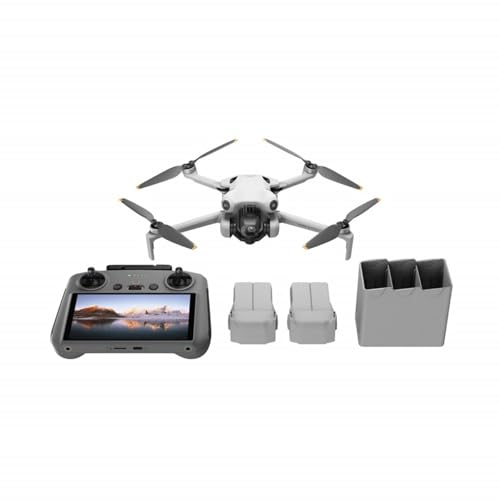
8. DJI Mavic 4 Pro Fly More Combo with DJI RC Pro 2…

If you’re serious about professional mapping and demand the absolute best in aerial data capture, the DJI Mavic 4 Pro (assuming a flagship model) Fly More Combo with DJI RC Pro 2 is likely your go-to. The star here is the 100MP Hasselblad camera with a 6K/60fps HDR video and a 4/3 CMOS sensor – this is top-tier for high-resolution orthomosaics and detailed 3D models. Its dual tele cameras add versatility for inspections from a distance. With an astounding 51 minutes of flight time and 30km O4+ transmission, this drone is a workhorse for large-area surveys, precision agriculture, and advanced photogrammetry projects.
-
Key Features:
100MP Hasselblad camerawith6K/60fps HDR videoand4/3 CMOS sensor.- Versatile Tele Images with
Dual tele cameras. - Dynamic Angles Unleashed with
360° Infinity Gimbal. - Safe Night Flights with
0.1-Lux Nightscape Omnidirectional Obstacle Sensing. - Extended Flight Time (51 minutes).
- Long-Range Video Transmission (30km/18.6mi O4+ with 10-bit HDR).
- Pro Display On-the-Go with
7″ rotatable, high-bright remote controller RC Pro 2. - Includes three batteries, charging hub, and more.
-
Pros:
- Unmatched
100MP camera resolutionand4/3 CMOS sensorfor ultimatedata fidelity. - Exceptional
flight timefor maximumarea coveragein a single mission. Dual tele camerasoffer versatility fordetailed asset inspections.RC Pro 2provides professional control and a crystal-clear display forflight planningandreal-time monitoring.Omnidirectional obstacle sensingfor superiorflight safety.
- Unmatched
-
Cons:
- High cost, representing a significant investment.
- The “Infinity Gimbal” and
nightscape visionare less critical for standardphotogrammetry. - Heavy and less portable than the Mini series.
User Impressions: Professionals consistently praise the Mavic 4 Pro for its incredible image quality and robust performance. It’s seen as the best DJI drone for mapping large, complex projects, with the RC Pro 2 being a particular highlight for efficient field operations.
9. DJI Mavic 4 Pro Drone 512GB Creator Combo (DJI RC…
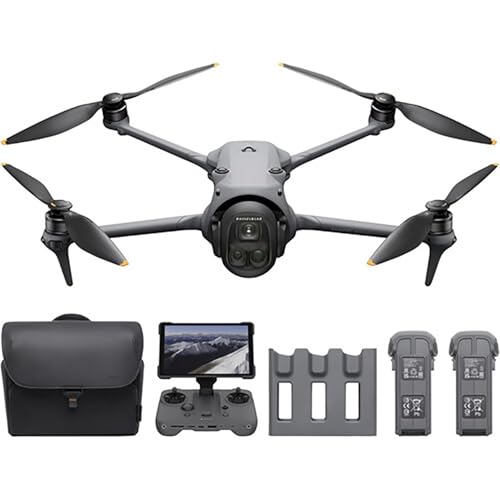
This Creator Combo of the DJI Mavic 4 Pro takes professional mapping to the next level by focusing on workflow efficiency and storage capacity. With 512GB onboard storage, ALL-I 4:2:2 encoding, and QuickTransfer with Wi-Fi 6, this drone is built for demanding data capture projects. It inherits all the 100MP Hasselblad camera and 51-minute flight time advantages, making it the top choice for high-volume photogrammetry where data integrity and fast offloading are paramount.
-
Key Features:
100MP Hasselblad Camera:4/3 CMOS sensorwithHasselblad Natural Color Solution,6K/60fps HDR video,100MP photos.Dual Telephoto Cameras:1/1.3″ 48MP medium teleand1/1.5″ 50MP tele lenses.Infinity Gimbal 360° Rotation.0.1-Lux Nightscape Vision:Omnidirectional obstacle sensingandLiDAR.51-Minute Flight Timewith high-capacity 95Wh battery.DJI O4+ Transmission:10-bit HDR live video feedup to30 km.ActiveTrack 360° Tracking.4K/120fps Slow Motion Recording.Up to 512GB Onboard Storage:ALL-I 4:2:2 encodingwithUFS memory.QuickTransfer with Wi-Fi 6: Transfer100MP RAW imagesand6K video filesat80MB/s.
-
Pros:
- Massive
onboard storageandfast transfer speedsare critical forlarge mapping projects. ALL-I 4:2:2 encodingensures the highestimage qualityforphotogrammetry processing.- All the incredible camera and flight performance benefits of the Mavic 4 Pro.
- Advanced
obstacle sensingandLiDARimproveoperational safetyand potentiallyground elevation data.
- Massive
-
Cons:
- Very high price point, geared towards
professional commercial drone operations. - Some features (e.g., ActiveTrack, Slow Motion) are more for cinematic use than
mapping. - Requires professional-grade
mapping softwareanddata processingcapabilities to fully leverage.
- Very high price point, geared towards
User Impressions: This combo is a dream for filmmakers and mapping professionals alike. The increased storage and quick transfer capabilities are highlighted as significant workflow enhancers, making it easier to manage huge datasets from extensive surveys.
10. DJI Flip (RC-N3), Drone With 4K UHD Camera for Adults,…

The DJI Flip, paired with the RC-N3, presents another compelling option for those seeking a lightweight and regulation-friendly drone for basic aerial mapping or site visualization. Its standout feature, full-coverage propeller guards made from carbon fiber, makes it exceptionally safe for close-range inspections where bumping into obstacles is a risk. With a respectable 1/1.3-inch CMOS sensor and 4K/60fps HDR video, it offers improved image quality over the Mini 4K, making it a viable tool for small-scale data capture and visual documentation.
-
Key Features:
- Fly Fearlessly with full-coverage
propeller guards. - Lightweight and Regulation Friendly (under 249 g), no FAA registration for recreational use.
- Your On-the-Go Director with
subject tracking. - Capture Every Detail with
1/1.3-inch CMOS sensor. - Stunning
4K/60fps HDR Video. - 31-Min Max Flight Time.
- Includes DJI Flip, DJI RC-N3 remote controller, one Intelligent Flight Battery.
- Fly Fearlessly with full-coverage
-
Pros:
- Enhanced safety for
close-proximity inspectionsdue topropeller guards. - Improved
image qualitywith1/1.3-inch CMOS sensorand4K/60fps HDR. - Lightweight and
FAA regulation-friendlyfor easy deployment. - Good flight time for its class.
- Enhanced safety for
-
Cons:
Subject trackingis less relevant fortraditional mapping.- Not designed for
advanced photogrammetryorhigh-precision GPS. - Single battery limits
extended mapping missions.
User Impressions: Users appreciate the added safety and improved camera performance of the DJI Flip. It’s often recommended for those needing a robust and reliable drone for casual inspections or capturing aerial views in slightly riskier environments.
Frequently Asked Questions (FAQ) about DJI Drones for Mapping
Q1: What features are most important in a DJI drone for mapping purposes?
A1: For effective drone mapping, look for:
– High-Resolution Camera: A larger sensor (e.g., 1-inch CMOS, 4/3 CMOS) and high megapixels (e.g., 4K, 100MP) are crucial for capturing detailed aerial imagery for photogrammetry.
– Stable Gimbal: Essential for blur-free images and consistent data capture.
– Long Flight Time: More minutes in the air mean larger areas covered per battery, increasing mapping efficiency.
– Precise GPS & Stability: Critical for accurate georeferencing of images and reliable flight planning.
– Obstacle Sensing: Enhances operational safety during autonomous mapping flight paths.
– Waypoint Navigation (via app): Allows for automated, repeatable flight missions to capture overlapping images.
Q2: Can I use a DJI Mini series drone for professional mapping?
A2: While DJI Mini drones can capture good quality 4K imagery, they are generally better suited for entry-level mapping, small-scale site inspections, property surveys, or casual aerial reconnaissance. For professional photogrammetry, large-area surveying, or high-accuracy 3D modeling, you’ll typically need drones like the DJI Air 3S or Mavic 4 Pro due to their larger sensors, more robust flight capabilities, and compatibility with advanced mapping software.
Q3: Do I need special software for drone mapping?
A3: Yes, to process the images captured by your drone into orthomosaics, 3D models, digital elevation models (DEMs), or topographic maps, you’ll need specialized photogrammetry software. Popular options include Pix4Dmapper, DroneDeploy, Agisoft Metashape, and RealityCapture. These tools allow you to stitch images together, correct for distortion, and generate spatially accurate geospatial data.
Q4: How does flight time impact mapping projects?
A4: Longer flight times are directly correlated with mapping efficiency. A drone with a longer battery life can cover a larger area in a single flight, reducing the number of takeoffs, landings, and battery swaps required. This saves time, reduces operational costs, and minimizes the risk of data gaps between flights, which is essential for large-scale surveys and construction monitoring.
Q5: Is an FPV drone like the DJI Avata 2 suitable for mapping?
A5: An FPV drone like the Avata 2 is generally not ideal for traditional photogrammetry or orthomosaic generation. Its 155° ultra-wide FOV introduces significant distortion, making accurate georeferencing and 3D model reconstruction challenging. However, its immersive POV and agility can be valuable for niche applications such as dynamic visual inspections of structures, pre-site reconnaissance in complex environments, or creative aerial videography for site visualization, where precise spatial data isn’t the primary goal.
Q6: What’s “Remote ID” and how does it affect mapping drones?
A6: Remote ID is an FAA requirement for most drones flying in the US. It broadcasts the drone’s identification, location, and control station location to allow authorities to identify airborne drones. For mapping drones, this means ensuring your drone is compliant (most newer DJI drones are) and registered if required for your specific commercial drone operations. Always check local regulations before flying.
Q7: How does sensor size impact mapping data quality?
A7: A larger camera sensor (e.g., 1-inch, 4/3-inch CMOS) can capture more light and detail, leading to higher-quality images, especially in challenging lighting conditions. For mapping, this translates to better data fidelity, allowing photogrammetry software to create more accurate and detailed orthomosaics and 3D models. Smaller sensors, while still capable, may struggle with fine textures or varying light, leading to less reliable data capture for precise applications.
Q8: Are higher megapixel cameras always better for mapping?
A8: While higher megapixels (MP) certainly help capture more detail, they are not the only factor. Sensor size, lens quality, and image processing capabilities also play crucial roles. A drone with a 100MP camera and a 4/3 CMOS sensor (like the Mavic 4 Pro) will generally yield superior mapping data compared to a 4K (approx. 8MP) camera with a smaller sensor. For photogrammetry, more pixels mean better ground sample distance (GSD) and finer detail in your mapping products, but balanced with other camera specs.