

Featured image for this comprehensive guide about does amazon use drones to deliver packages?
Image source: circuitdigest.com
The vision of autonomous drones zipping through the skies, delivering packages directly to our doorsteps, has long been a staple of science fiction. For years, companies like Amazon have fueled this futuristic dream, showcasing prototypes and making grand announcements. But in the present day, with online shopping becoming more integral to our lives than ever, a crucial question lingers for many consumers: does Amazon use drones to deliver packages? Is this technological marvel a widespread reality, or is it still largely confined to the drawing board and experimental labs?
The answer is nuanced and fascinating. While Amazon has made significant strides in drone technology and has indeed launched limited commercial drone delivery operations in specific locations, the widespread, sky-filling network of autonomous couriers that many imagine is not yet a reality. The journey from a groundbreaking announcement to everyday service is fraught with technological hurdles, regulatory complexities, and logistical challenges. Understanding the current landscape of Amazon drone delivery means delving into the ambitious project known as Prime Air, its current capabilities, and the road ahead.
This comprehensive guide will explore Amazon’s pioneering efforts in drone delivery, shedding light on where they are today, the cutting-edge technology powering their drones, and the significant obstacles they must overcome. We’ll examine the regulatory environment, the benefits and challenges of this innovative delivery method, and what the future holds for Amazon’s ambition to transform the last mile of delivery. Prepare to navigate the skies with us as we uncover the truth behind whether Amazon uses drones to deliver packages in your neighborhood.
Quick Answers to Common Questions
Does Amazon use drones to deliver packages widely right now?
No, not for widespread delivery across the globe yet. Amazon is currently running very limited drone delivery trials in specific locations, so it’s not a common service.
So, is Amazon actually using drones to deliver packages anywhere at all?
Yes, they are! Amazon is indeed using drones for package delivery, but only in a couple of highly experimental and localized areas in the US as part of their Prime Air initiative.
Where exactly does Amazon use drones to deliver packages?
Currently, you might see their drones delivering in select areas of Lockeford, California, and College Station, Texas. These are the primary pilot zones where the service is active.
Can I choose to have Amazon use drones to deliver my packages where I live?
Most likely not yet! The drone delivery service is extremely restricted to specific addresses within those pilot zones, so it’s not generally available to the public right now.
What type of items does Amazon use drones to deliver?
They typically deliver smaller, lighter packages, usually under 5 pounds. Think everyday essentials like household goods, snacks, or small electronics that fit within the drone’s capacity.
📋 Table of Contents
- The Sky-High Ambition: What is Amazon Prime Air?
- Where is Amazon Drone Delivery Happening Now? The Current Reality
- Navigating the Skies: Technology Behind Amazon’s Drones
- The Regulatory Hurdle: How FAA Rules Shape Drone Delivery
- Beyond the Hype: Benefits and Challenges of Drone Delivery
- The Future of Last-Mile Delivery: What’s Next for Amazon and Drones?
- Conclusion: The Sky is the Limit, But With Clear Flight Paths
The Sky-High Ambition: What is Amazon Prime Air?
Amazon’s venture into drone delivery, officially dubbed Prime Air, was first unveiled by CEO Jeff Bezos during a “60 Minutes” interview in December 2013. The announcement sent shockwaves through the tech and logistics industries, painting a vivid picture of a future where packages weighing up to five pounds could be delivered to customers within 30 minutes of ordering. This wasn’t just a fleeting idea; it was a serious commitment to revolutionizing the concept of rapid, on-demand fulfillment.
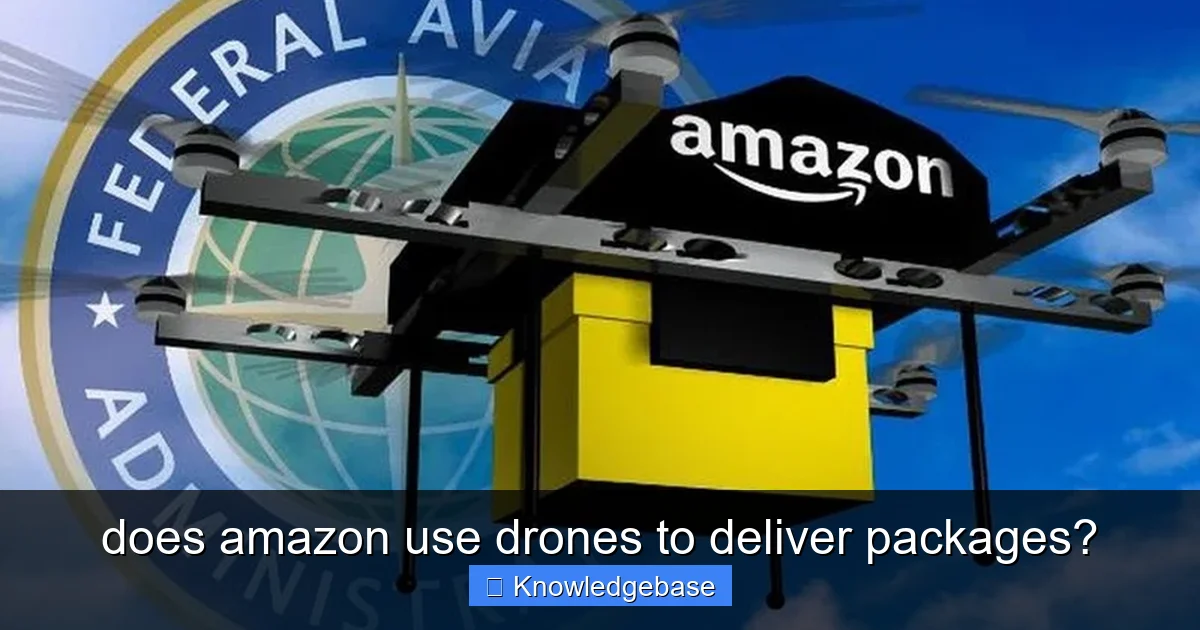
Learn more about does amazon use drones to deliver packages? – does amazon use drones to deliver packages?
Image source: cherrypicksreviews.com
The core vision behind Prime Air is to drastically reduce delivery times and increase efficiency in the “last mile” – the final leg of a package’s journey from a distribution center to the customer’s door. Traditional delivery methods, relying on vans and human drivers, face challenges like traffic congestion, fuel costs, and labor intensity. By leveraging autonomous drones, Amazon aims to bypass these issues, offering unparalleled speed and potentially reducing its carbon footprint in the long run.
| Feature | Description | Key Detail/Status |
|---|---|---|
| **Program Name** | Amazon’s dedicated drone delivery service. | Prime Air (announced 2013, commercial launches 2022) |
| **Current Operational Status** | Limited commercial drone deliveries to customers. | Active in select U.S. cities since late 2022. |
| **Target Delivery Speed** | Aiming for rapid delivery from order placement. | Under 30 minutes for eligible items. |
| **Package Weight Limit** | Restrictions on the maximum weight of items delivered. | Up to 5 pounds (covers ~85-90% of daily packages). |
| **Initial Service Areas** | First U.S. locations where the service was rolled out. | Lockeford, CA & College Station, TX (additional areas planned). |
Over the years, Amazon has invested heavily in research and development, iterating through various drone designs and technologies. Early prototypes were a far cry from the sleek, robust models seen today. The company’s commitment to Prime Air underscores its belief that autonomous aerial delivery isn’t just a novelty but a crucial component of the future of e-commerce. They envision a seamless integration of ground and air logistics, where smaller, urgent packages are handled by drones, complementing the existing network of truck and van deliveries. This ambitious project aims not just to deliver packages, but to redefine customer expectations for speed and convenience, pushing the boundaries of what’s possible in the world of online retail, and fundamentally changing how we answer the question: does Amazon use drones to deliver packages?
Where is Amazon Drone Delivery Happening Now? The Current Reality
Despite the grand vision and continuous development, the commercial rollout of Amazon drone delivery is currently quite limited. While the public imagination often conjures images of a drone swarm over every city, the reality is a phased, cautious deployment focused on specific pilot locations. So, does Amazon use drones to deliver packages widespread? Not yet, but they are making tangible progress in select communities.
Learn more about does amazon use drones to deliver packages? – does amazon use drones to deliver packages?
Image source: thumbs.dreamstime.com
Initial Pilot Programs and Locations
Amazon officially launched its first drone delivery service to customers in the United States in December 2022. This milestone marked the culmination of years of testing and regulatory navigation. The initial launch locations were:
- Lockeford, California: A small, rural town in San Joaquin County.
- College Station, Texas: A larger city known for Texas A&M University.
These locations were strategically chosen for various reasons, including relatively clear airspace, community engagement, and the ability to operate within specific regulatory frameworks. In these communities, eligible Prime members living within a designated delivery radius can sign up for the service and receive packages via drone.
How it Works for Customers
Customers in these pilot areas have access to a specific selection of items eligible for drone delivery. These typically include smaller, lighter packages – everything from household essentials and health & beauty products to select food items. Once an order is placed, the drone picks up the package from a specialized Amazon fulfillment center or delivery station. It then autonomously navigates to the customer’s backyard, hovers at a safe height, and gently lowers the package to the ground using a tether system. The drone does not land, ensuring safety and efficiency.
The operational scale in these locations is still modest. It’s not a service available to everyone in Lockeford or College Station, but rather a targeted rollout to specific neighborhoods within those towns. Amazon’s aim with these pilot programs is to gather real-world data, refine their technology, and optimize the customer experience and operational efficiency, all while working closely with local communities and regulators. The insights gained from these limited operations are crucial for scaling up the service in the future and answering the question of does Amazon use drones to deliver packages on a broader scale.
Here’s a snapshot of some current operational details:
| Location | Launch Year (Commercial) | Service Area Characteristics | Key Items Delivered (Examples) | Status (as of late 2023/early 2024) |
|---|---|---|---|---|
| Lockeford, California, USA | December 2022 | Rural/Suburban | Household goods, small electronics, health & beauty products | Active Pilot Program |
| College Station, Texas, USA | December 2022 | Suburban | Food items, small pharmaceuticals, office supplies | Active Pilot Program |
| Cambridgeshire, England, UK (Trial) | December 2016 | Rural | Early test deliveries (Fire TV stick, popcorn) | Limited Trials (no current public service) |
This table highlights Amazon’s cautious, data-driven approach. The question “does Amazon use drones to deliver packages?” remains qualified by “in very specific, limited areas.”
Navigating the Skies: Technology Behind Amazon’s Drones
The seemingly simple act of an autonomous drone delivering a package is underpinned by a sophisticated array of technologies. Amazon’s Prime Air drones are engineering marvels, designed for safety, efficiency, and reliability. Understanding these technological advancements helps to appreciate the complexity involved in making Amazon drone delivery a practical reality.
Drone Design and Evolution
Amazon has gone through several iterations of drone design. Early prototypes often featured a multi-rotor configuration, similar to many consumer drones. However, as the project evolved, Amazon developed more specialized designs, such as the MK27-2 and the newer MK30.
- Hybrid Designs: Modern Prime Air drones often incorporate elements of both traditional multi-rotor drones (for vertical takeoff and landing) and fixed-wing aircraft (for efficient forward flight). This hybrid approach allows them to cover longer distances more efficiently while still having the precision for vertical delivery.
- Payload Capacity: Current Amazon drones are designed to carry packages up to five pounds, which covers a significant percentage of Amazon’s ordered items. The package is typically housed in a compartment and lowered via a winch system to the ground.
- Aerodynamics and Propulsion: Optimized for quiet operation and stability, the drones use advanced electric propulsion systems. Noise reduction is a key consideration for public acceptance.
Autonomous Flight Systems and AI
The true intelligence behind Amazon’s drones lies in their autonomous flight systems. These aren’t just remote-controlled aircraft; they are highly sophisticated robots capable of making real-time decisions.
- Advanced Sensors: Drones are equipped with a suite of sensors, including cameras (visual and infrared), radar, ultrasonic sensors, and GPS. These provide a comprehensive understanding of their environment.
- Sense-and-Avoid Technology: This is perhaps the most critical safety feature. Amazon’s drones use proprietary algorithms and sensor data to detect obstacles in their flight path, whether static (trees, buildings) or dynamic (other aircraft, birds). If an obstacle is detected, the drone can reroute, hover, or perform an evasive maneuver. This is crucial for operating Beyond Visual Line of Sight (BVLOS).
- AI and Machine Learning: Artificial intelligence powers the drone’s navigation, decision-making, and even its ability to learn from past flights. Machine learning models help the drone identify safe landing spots, predict weather patterns, and optimize flight paths.
Safety Features and Redundancy
Safety is paramount for any aerial operation, especially one involving autonomous aircraft flying over populated areas. Amazon has built multiple layers of redundancy and safety protocols into its Prime Air system.
- Redundant Systems: Critical components, such as batteries, motors, and flight control systems, often have backups. If one system fails, another can take over, preventing a catastrophic failure.
- Fail-Safe Protocols: Drones are programmed with specific fail-safe behaviors. For instance, if communication is lost or a critical system error occurs, the drone might automatically return to base, perform an emergency landing in a pre-approved safe zone, or simply hover until a solution is determined.
- Air Traffic Control Integration: While still in early stages, future scalability will require seamless integration with existing air traffic control systems to ensure drones can operate safely alongside manned aircraft.
These technological advancements are what allow Amazon to confidently assert that yes, does Amazon use drones to deliver packages, even if it’s in a limited capacity for now. The ongoing development of these systems will dictate the pace and scale of future expansion.
The Regulatory Hurdle: How FAA Rules Shape Drone Delivery
The skies are not an open free-for-all. Every aircraft, from jumbo jets to small drones, operates under a stringent set of rules designed to ensure safety and prevent collisions. For Amazon and other companies pursuing drone delivery, navigating the complex web of aviation regulations, particularly from the Federal Aviation Administration (FAA) in the United States, has been one of the most significant and time-consuming challenges. This regulatory landscape directly influences how quickly and widely Amazon can use drones to deliver packages.
Part 135 Certification: The Golden Ticket
For a company to conduct commercial drone delivery operations in the United States, it typically needs a Part 135 Air Carrier and Operator Certificate from the FAA. This certification is usually associated with traditional air cargo and passenger airlines, and it signifies that the operator has met the FAA’s rigorous safety standards for air carrier operations. It covers areas such as:
- Aircraft Airworthiness: Ensuring the drones themselves meet design and manufacturing safety standards.
- Operator Competency: Demonstrating that the company has trained personnel, maintenance procedures, and operational control systems in place.
- Safety Management System (SMS): A formal system for managing safety risks.
Amazon Prime Air was granted its Part 135 certificate by the FAA in August 2020. This was a monumental achievement, placing Amazon alongside a select few companies (like Wing and UPS Flight Forward) with this crucial authorization. Obtaining this certificate was a testament to Amazon’s robust safety case and its commitment to meeting stringent aviation standards, effectively paving the way for the pilot programs where Amazon does use drones to deliver packages.
Challenges Beyond Visual Line of Sight (BVLOS)
One of the biggest regulatory hurdles for scalable drone delivery is operations Beyond Visual Line of Sight (BVLOS). Currently, many drone regulations require an operator to maintain direct visual contact with their drone at all times. This is impractical for true commercial delivery, where drones need to travel several miles from a central hub to a customer’s home.
- Risk Mitigation: The FAA needs assurances that BVLOS operations can be conducted safely without posing undue risk to people on the ground or other aircraft. This often requires advanced detect-and-avoid technology (as discussed in the previous section) and robust communication systems.
- Airspace Integration: Integrating thousands, or even millions, of autonomous delivery drones into shared airspace with manned aircraft is a complex undertaking. It requires sophisticated air traffic management systems and standardized protocols.
The Pace of Regulation vs. Innovation
The rapid pace of drone technology innovation often outstrips the slower, more deliberate process of regulatory development. This gap means that while companies like Amazon are developing increasingly capable drones, the legal frameworks sometimes lag, slowing down commercial deployment. The FAA is continually working on new rules and exemptions, but the process is necessarily cautious to ensure public safety.
The regulatory environment is not static. As Amazon gathers more data from its pilot programs and continues to demonstrate the safety and reliability of its systems, it can advocate for further regulatory advancements that could enable broader expansion. For now, the answer to does Amazon use drones to deliver packages is heavily constrained by these crucial regulatory frameworks, which prioritize safety above all else.
Beyond the Hype: Benefits and Challenges of Drone Delivery
While the prospect of Amazon drone delivery is undeniably exciting, it’s essential to look beyond the hype and consider both the significant benefits it offers and the formidable challenges that must be overcome for widespread adoption. Understanding these aspects provides a balanced perspective on whether Amazon uses drones to deliver packages effectively and sustainably.
Benefits of Drone Delivery
The advantages of a robust drone delivery network are compelling, driving Amazon’s continued investment in Prime Air:
- Unprecedented Speed: The most significant benefit is speed. Drones can often take direct routes, avoiding road traffic and delivering packages in minutes rather than hours or days. Amazon’s goal of “30 minutes or less” delivery becomes a reality for eligible items.
- Increased Efficiency: By automating the last mile, drones can potentially reduce operational costs associated with fuel, vehicle maintenance, and human labor over time. They can also operate around the clock, increasing logistical efficiency.
- Reduced Environmental Impact: Electric drones produce zero direct emissions during flight, offering a greener alternative to traditional fossil-fuel-powered delivery vehicles, especially for short-distance deliveries. This aligns with Amazon’s sustainability goals.
- Enhanced Customer Convenience: Customers receive their orders faster, enhancing satisfaction and loyalty. For urgent items, this speed can be a game-changer.
- Access to Remote Areas: Drones can reach areas that are difficult or costly for traditional ground vehicles to access, such as remote rural locations or areas with challenging terrain.
- Reduced Road Congestion: Shifting a portion of package deliveries to the air could alleviate traffic congestion on roads, particularly in urban and suburban areas.
Challenges of Drone Delivery
Despite the promise, several significant hurdles stand in the way of ubiquitous drone delivery:
- Regulatory and Airspace Complexity: As discussed, obtaining FAA approval for Beyond Visual Line of Sight (BVLOS) operations, operating over people, and integrating into existing air traffic control systems remains a monumental task. Each country has its own set of rules, complicating international expansion.
- Weather Limitations: Drones are susceptible to adverse weather conditions such as strong winds, heavy rain, snow, and lightning. These conditions can ground an entire fleet, disrupting service and requiring alternative delivery methods.
- Payload and Range Limitations: Current drone technology limits the weight and size of packages that can be carried (typically up to 5 lbs for Amazon). Battery life also restricts the operational range, requiring frequent recharging or battery swaps.
- Public Perception and Noise Concerns: While some find drones fascinating, others worry about noise pollution, privacy (cameras on drones), and safety (falling drones). Gaining widespread public acceptance is crucial.
- Cost and Infrastructure: The initial investment in drone fleets, sophisticated ground infrastructure (launch/landing pads, charging stations), and advanced control systems is substantial. Maintaining these fleets also adds to the operational cost.
- Security Concerns: Drones could be vulnerable to cyberattacks (hacking), signal jamming, or even physical theft of packages. Robust security measures are essential.
- Ethical and Privacy Issues: The widespread use of drones with cameras raises questions about data collection, surveillance, and individual privacy, which need careful consideration and clear policies.
- Integration with Existing Logistics: Seamlessly integrating drone operations with Amazon’s vast existing network of fulfillment centers, sorting centers, and ground delivery routes presents a complex logistical puzzle.
The journey to fully realize the potential of Amazon drone delivery is a marathon, not a sprint. Overcoming these challenges will determine the ultimate scale and success of Prime Air and will be key in providing a definitive answer to “does Amazon use drones to deliver packages?” for a broader audience.
The Future of Last-Mile Delivery: What’s Next for Amazon and Drones?
The current state of Amazon drone delivery, while limited, is a clear indicator of the company’s long-term commitment to revolutionizing the last mile. The question is no longer simply “does Amazon use drones to deliver packages?” but rather, “how widely and how soon will they?” The future of Prime Air is poised for significant expansion and technological advancement, promising a transformative impact on e-commerce logistics.
Expansion and Scaling Up Operations
Amazon’s strategy involves a gradual, deliberate expansion from its initial pilot locations. Based on lessons learned in Lockeford and College Station, the company aims to:
- Add More Service Areas: Expect Amazon to announce additional drone delivery locations, likely starting with suburban or rural areas that offer less complex airspace. These expansions will be driven by operational success and regulatory progress.
- Increase Flight Frequency and Capacity: As the technology matures and regulatory confidence grows, the number of daily drone deliveries per location will increase, handling a larger volume of eligible packages.
- Broader Product Selection: While still constrained by payload, continuous improvements in drone design and lifting capabilities might allow for a slightly wider range of products to be delivered by drone.
Technological Advancements on the Horizon
The drones themselves are constantly evolving. Future iterations of Amazon’s delivery drones will likely feature:
- Enhanced Autonomy and AI: Even more sophisticated AI will enable drones to navigate increasingly complex environments, respond to unforeseen circumstances, and optimize routes with greater precision.
- Improved Battery Technology: Longer-lasting batteries will extend range and flight time, allowing drones to serve larger geographic areas from a single hub. Rapid charging solutions will also be crucial.
- Increased Payload and Versatility: While the 5-pound limit is effective for many items, future drones might be able to handle slightly heavier or oddly shaped packages, broadening their utility.
- Advanced Safety Systems: Continuous refinement of sense-and-avoid technology, redundant systems, and robust communication will further enhance safety and reliability, paving the way for operations in more densely populated areas.
Integration with a Multi-Modal Delivery Network
It’s important to recognize that drones are not intended to replace Amazon’s entire delivery infrastructure. Instead, they will become a vital component of a multi-modal network. This means:
- Complementary Service: Drones will primarily handle smaller, urgent, or time-sensitive packages, complementing traditional van deliveries for larger items or less time-critical orders.
- Optimized Logistics: Amazon will leverage data analytics and AI to determine the most efficient delivery method for each order, choosing between drones, electric vans, human couriers, or even robotic ground vehicles.
- Sustainable Logistics: The push for electric drones aligns with Amazon’s broader commitment to sustainability, aiming for net-zero carbon emissions by 2040. Drone delivery will play a key role in reducing the carbon footprint of the last mile.
Ultimately, the future of Amazon drone delivery points towards a highly automated, efficient, and integrated logistics system. While the transformation won’t happen overnight, the steady progress and significant investment suggest that one day, the answer to “does Amazon use drones to deliver packages?” will be an unequivocal “yes, everywhere, for many items,” profoundly changing how we receive our online purchases.
Conclusion: The Sky is the Limit, But With Clear Flight Paths
So, to circle back to our central question: does Amazon use drones to deliver packages? The definitive answer is yes, they absolutely do, but it’s crucial to understand the context. Currently, Amazon drone delivery is a reality for a select few customers in specific pilot locations in the United States, operating under stringent regulatory approval and with carefully designed safety protocols. It’s not yet the widespread service many envision when they think of futuristic drone fleets.
Amazon’s Prime Air project represents a monumental effort to push the boundaries of logistics and customer service. From its ambitious announcement in 2013 to the first commercial deliveries in 2022, the journey has been marked by remarkable technological innovation in drone design, autonomous flight systems, and advanced safety features. However, this journey has also highlighted the significant challenges that stand in the way of scalability, particularly the complex regulatory environment set by bodies like the FAA, the limitations imposed by weather, and the crucial need for public acceptance.
The future of last-mile delivery will undoubtedly include autonomous drones. Amazon’s commitment to expanding its drone operations, coupled with ongoing advancements in drone technology and evolving regulatory frameworks, indicates that these flying couriers will become an increasingly common sight. They won’t replace human delivery drivers entirely, but rather integrate into a sophisticated, multi-modal delivery network, handling specific types of packages with unparalleled speed and efficiency. The promise of near-instant delivery remains a powerful driving force.
As Amazon continues to refine its Prime Air service, address operational challenges, and work with regulators, we can expect to see a gradual but steady expansion of drone delivery to more communities. The dream of packages arriving from the sky is no longer just a futuristic fantasy; it’s a developing reality, carefully navigating the complexities of our present world. The next time you ask “does Amazon use drones to deliver packages?” remember that while it might not be at your doorstep just yet, the skies are certainly getting closer to being part of Amazon’s everyday delivery solution.
🎥 Related Video: Amazon’s Prime Air drone delivery service | TechCrunch
📺 TechCrunch
Amazon announced the launch of drone deliveries of medicines purchased through Amazon Pharmacy, its online prescription …
Frequently Asked Questions
Is Amazon currently using drones to deliver packages?
Yes, Amazon has launched limited drone delivery services in specific locations. While not yet widespread, they are actively using drones to bring select packages to customers in designated areas.
Where is Amazon’s drone delivery service available?
Amazon currently offers drone delivery, known as Prime Air, in a few select areas within the United States, such as Lockeford, California, and College Station, Texas. They have also recently expanded to certain locations in the UK and Italy.
What types of packages can Amazon drones deliver?
Amazon drones are designed to deliver smaller, lighter packages, typically weighing up to five pounds. This includes common household items, health and beauty products, and electronics that fit within the drone’s carrying capacity.
How does Amazon’s drone delivery work?
Once an eligible customer places an order, the package is loaded onto a drone at a nearby fulfillment center. The drone then flies autonomously to the customer’s backyard, hovers, and gently lowers the package to the ground.
What are Amazon’s plans for future drone delivery expansion?
Amazon is continually working to expand its Prime Air drone delivery service to more cities and regions. They are investing in new drone technology and regulatory approvals to make drone delivery a more common option for customers globally.
Are Amazon delivery drones safe and reliable?
Amazon emphasizes safety and reliability in its drone operations. Their delivery drones undergo rigorous testing and are equipped with advanced sensor technology to detect and avoid obstacles, ensuring a secure delivery process for both packages and people.