So, you’re looking to elevate your filmmaking game with some breathtaking aerial shots? Whether you’re a seasoned professional or an aspiring content creator, having the right drone can make all the difference. When it comes to aerial cinematography, DJI has long been the gold standard, offering a range of drones that blend cutting-edge technology with user-friendly design. But with so many options, how do you pick the best DJI drone for cinematography that fits your needs?
Don’t sweat it! We’ve done the legwork for you. In this guide, we’ll dive deep into five top DJI drones, highlighting their unique strengths and helping you decide which one will help you nail those epic cinematic sequences. Get ready to explore drones that bring professional aerial photography and videography within your reach.
Why Choose DJI for Cinematography?
DJI isn’t just a popular drone brand; it’s practically synonymous with aerial innovation. Their drones are renowned for their exceptional camera quality, advanced stabilization systems (hello, buttery-smooth footage!), reliable flight performance, and intuitive controls. These features make DJI drones a favorite among filmmakers for capturing everything from sweeping landscapes to dynamic action shots. Plus, the ecosystem of accessories and the robust DJI Fly app further enhance the filmmaking experience, making it easier than ever to achieve professional-grade results.
Our Top Picks: Best DJI Drone for Cinematography
Let’s get into the nitty-gritty of each contender!
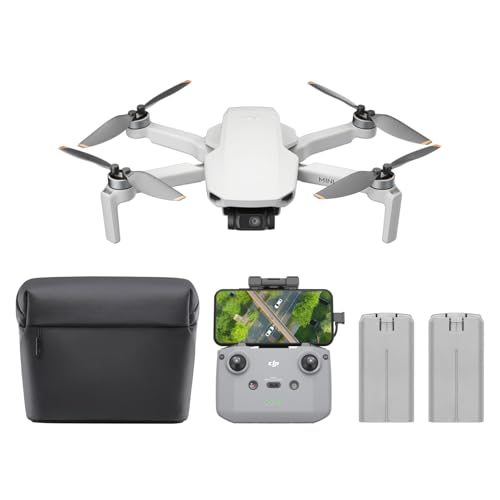
1. DJI Mini 4K Camera Drone Combo

If you’re looking for an ultra-portable drone that punches above its weight in video quality, the DJI Mini 4K is an absolute gem. This little powerhouse is a fantastic entry point for aspiring filmmakers or experienced cinematographers who need a lightweight, no-fuss option for travel and quick shoots. Its biggest appeal? Being under 249g, it typically bypasses pesky FAA registration requirements for recreational use, making it incredibly convenient to fly almost anywhere. Despite its compact size, it delivers impressive 4K UHD video thanks to its 3-axis gimbal, ensuring your footage is smooth and cinematic, even in challenging conditions.
- No Registration Needed – Under 249g, often exempt from FAA registration for recreational use.
- 4K Ultra HD & 3-Axis Gimbal – Capture crystal-clear 4K resolution with superior stability.
- 38kph (Level 5) Wind Resistant – Stable flight even in moderate winds, thanks to brushless motors.
- 10km Max HD Video Transmission – Reliable, long-range video feed with excellent anti-interference.
- Extended Battery Life – Choose from 1 (31-min), 2 (62-min), or 3 (93-min) battery sets.
- Beginner-Friendly and Safe – Features like one-tap takeoff/landing, GPS Return to Home (RTH), and stable hovering.
- Intelligent QuickShots – Automated cinematic movements like Helix, Dronie, Rocket, Circle, and Boomerang.
- Combo Inclusions – Includes drone, 2 batteries, DJI RC-N1C remote controller, shoulder bag, and more.
Pros:
– Ultra-lightweight and portable, ideal for travel.
– Excellent 4K video quality with 3-axis stabilization.
– Long flight time options with multiple batteries.
– User-friendly for beginners, quick to get airborne.
– Strong wind resistance for its size.
Cons:
– Lacks advanced obstacle avoidance features found in larger models.
– Not designed for complex professional color grading or higher frame rates (beyond 4K).
User Impressions:
Users consistently praise the Mini 4K for its incredible portability and surprisingly good image quality for a drone of its size. Many beginners find it the perfect starting point for aerial videography, while experienced users appreciate its grab-and-go convenience for capturing impromptu cinematic moments. The extended battery combos are often highlighted as a major plus.
2. DJI Mavic 4 Pro Drone 512GB Creator Combo
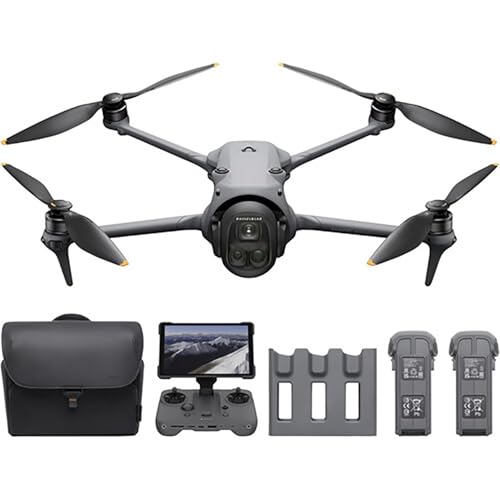
When professional-grade imaging is non-negotiable, the DJI Mavic 4 Pro Creator Combo steps up to the plate. This isn’t just a drone; it’s a complete aerial filmmaking studio designed for discerning cinematographers. Boasting a massive 4/3 CMOS Hasselblad camera that delivers breathtaking 6K/60fps HDR video and ultra-detailed 100MP photos, the Mavic 4 Pro is engineered for unparalleled image quality. Add to that its revolutionary 360° Infinity Gimbal and dual telephoto lenses, and you have a drone that offers creative freedom and precision previously unheard of in a consumer drone. The included 512GB of onboard storage means you can shoot extensive high-resolution footage without constantly swapping memory cards.
- 100MP Hasselblad Camera – 4/3 CMOS sensor for 6K/60fps HDR video and 100MP photos.
- Dual Telephoto Cameras – 1/1.3″ 48MP medium tele and 1/1.5″ 50MP tele lenses for versatile shots.
- Infinity Gimbal 360° Rotation – Enables gravity-defying shots and dynamic camera angles.
- 0.1-Lux Nightscape Vision – Advanced omnidirectional obstacle sensing and LiDAR for safe flights in near-darkness.
- 51-Minute Flight Time – High-capacity 95Wh battery for extended missions.
- DJI O4+ Transmission – Ultra-reliable 10-bit HDR live video feed up to 30 km.
- ActiveTrack 360° Tracking – Keeps subjects in cinematic focus with enhanced stability.
- 4K/120fps Slow Motion Recording – Capture smooth, high-frame-rate footage.
- Up to 512GB Onboard Storage – Creator Combo supports ALL-I 4:2:2 encoding with ultra-fast UFS memory.
- QuickTransfer with Wi-Fi 6 – Fast transfer of large files without powering on the drone.
Pros:
– Unrivaled image and video quality with Hasselblad camera.
– Extremely versatile with dual telephoto lenses and 360° gimbal.
– Exceptional low-light performance and obstacle avoidance.
– Industry-leading flight time and transmission range.
– Massive onboard storage for professional workflows.
– Advanced tracking and slow-motion capabilities.
Cons:
– High price point makes it a significant investment.
– Larger and heavier than Mini series, less portable.
User Impressions:
Professionals laud the Mavic 4 Pro as a “game-changer” for aerial filmmaking, praising its incredible detail, color science, and the creative flexibility offered by the 360° gimbal. The extended flight time and robust transmission are frequently cited as crucial for long, complex shoots, making it a dream machine for serious content creators.
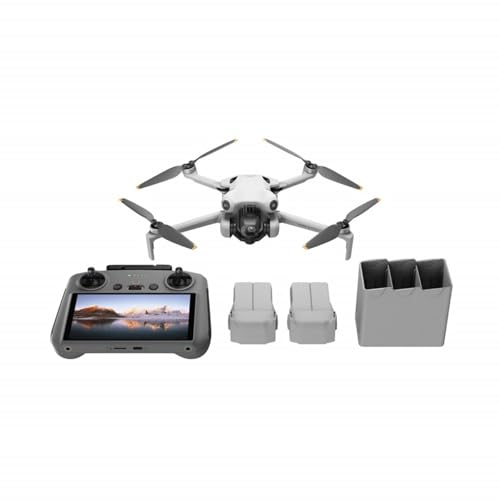
3. DJI Mavic 4 Pro Fly More Combo with DJI RC

The DJI Mavic 4 Pro Fly More Combo takes the exceptional capabilities of the Mavic 4 Pro and bundles them with the essentials for extended, professional cinematic expeditions. This combo is perfect for filmmakers who need to maximize their time in the air and maintain precise control. While it shares the same incredible 100MP Hasselblad camera and advanced flight features as the Creator Combo, the “Fly More” package prioritizes endurance and control, including three batteries and the high-performance DJI RC 2 remote controller. The RC 2’s built-in, bright display means less setup time and a clearer view of your shot, even in direct sunlight, which is crucial for nailing those critical takes.
- 100MP Main Camera – DJI Mavic 4 Pro’s 100MP Hasselblad camera with 6K/60fps HDR video.
- Versatile Tele Images – Dual tele cameras for crisp, detailed zooms.
- Dynamic Angles Unleashed – 360° Infinity Gimbal for dynamic camera movement.
- Safe Night Flights – 0.1-Lux Nightscape Omnidirectional Obstacle Sensing.
- Extended Flight Time – Up to 51 minutes per battery, with three included in this combo.
- Long-Range Video Transmission – 30km/18.6mi O4+ delivers 10-bit HDR video.
- Pro Display On-the-Go – 7″ rotatable, high-bright DJI RC 2 remote controller.
- Combo Inclusions – DJI Mavic 4 Pro, DJI RC 2, three batteries, charging hub, and more.
Pros:
– Same professional-grade camera and flight performance as the Mavic 4 Pro.
– Extended flight time with multiple batteries, ideal for long shoots.
– Dedicated, high-bright DJI RC 2 controller enhances control and viewing.
– Advanced safety features like omnidirectional obstacle sensing.
– Excellent for diverse cinematic shots, from wide to telephoto.
Cons:
– Still a premium investment.
– The weight and size might be a factor for ultra-light travel.
User Impressions:
Users appreciate the seamless integration of the DJI RC 2, calling it a “game-changer” for field operations. The extra batteries are consistently highlighted as invaluable for professionals who can’t afford to stop filming. It’s considered the ultimate package for serious aerial cinematographers who need reliability and endurance.
4. DJI Avata 2 Fly More Combo (3 Batteries)

For those seeking to push the boundaries of cinematic expression with dynamic, immersive shots, the DJI Avata 2 Fly More Combo offers an exhilarating FPV experience. This drone isn’t about slow, steady pans; it’s about adrenaline-pumping, “right there in the cockpit” footage that adds a unique, visceral perspective to your projects. With intuitive motion control via the DJI RC Motion 3, even beginners can perform jaw-dropping flips and rolls, capturing stunning 4K/60fps ultra-wide video (155° FOV) or dramatic 4K/100fps slow-motion. Its built-in propeller guard ensures durability and safety, letting you fly confidently through tight spaces and challenging environments. This is the best DJI drone for cinematography if you’re aiming for a truly unique visual style.
- Unlock Adrenaline-Pumping Immersive Flying – First-person view through goggles for a breathtaking perspective.
- Intuitive Motion Control – Effortlessly control with hand movements using DJI RC Motion 3.
- Easy ACRO, Fly Like a Pro in No Time – Perform flips, rolls, 180° drifts, and power loops with ease.
- Tight Shots in Super-Wide 4K – 155° FOV and 1/1.3-inch sensor for stunning 4K/60fps and 4K/100fps Slow-Motion.
- Built-in Propeller Guard for Safety – Robust and durable for flying in various scenarios.
- Hassle-Free POV Content, Film making at launch – Lightweight, portable, with LightCut app templates for easy editing.
- Combo Inclusions – Drone, 3 Intelligent Batteries, DJI RC Motion 3, DJI Goggles 3, and more.
- FAA Remote ID Compliant.
Pros:
– Delivers incredibly immersive and dynamic FPV footage.
– Motion controller makes complex maneuvers accessible to beginners.
– Excellent 4K wide-angle video and slow-motion capabilities.
– Robust design with propeller guards for safe flying in confined spaces.
– Offers a unique aesthetic distinct from traditional cinematic drones.
Cons:
– Shorter flight time compared to Mavic series (though 3 batteries help).
– FPV learning curve can be steeper for fully manual control.
– Less ideal for traditional smooth, slow cinematic shots unless specifically used creatively.
User Impressions:
Users describe the Avata 2 as “pure fun” and a “creative powerhouse” for unique shots. The motion controller is frequently lauded for making FPV flying surprisingly intuitive, allowing filmmakers to capture shots previously only possible with extensive FPV experience. The durability and the immersive experience are major highlights.
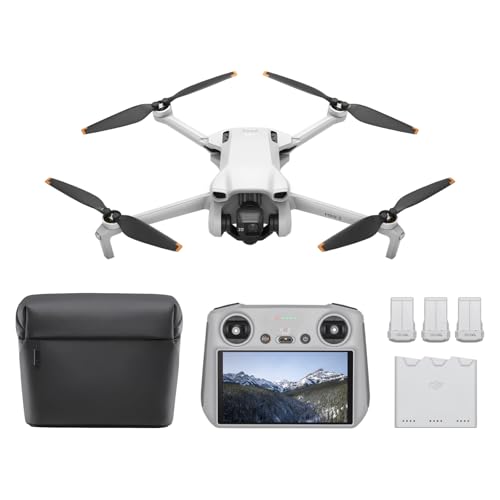
5. DJI Mini 3 (DJI RC)

For filmmakers who prioritize portability without compromising on quality, the DJI Mini 3 (DJI RC) is an outstanding choice. Much like its Mini 4K sibling, it remains under 249g, often exempting it from FAA registration for recreational use. What makes the Mini 3 particularly attractive for cinematographers is its ability to film in 4K HDR video with Dual Native ISO Fusion, capturing rich details in both highlights and shadows. The standout feature for content creators is True Vertical Shooting, which allows you to effortlessly capture tall landmarks or perfectly frame shots for social media platforms like Instagram and TikTok, ready to share instantly. Coupled with the DJI RC controller’s built-in HD display, it’s a seamless and user-friendly experience from takeoff to landing.
- No Registration Needed – Under 249g, no FAA registration for recreational use.
- 4K UHD Stunning Imagery – Film in 4K HDR Video with Dual Native ISO Fusion.
- Striking Vertical Videos are Ready to Share – True Vertical Shooting for social media-ready content.
- Extended Battery Life – Up to 51 minutes with Intelligent Flight Battery Plus (sold separately), or 114 min with Fly More Combo.
- 38kph (Level 5) Wind Resistant and 3-Axis Gimbal – Stable and smooth 4K imagery.
- 10km Max HD Video Transmission – Reliable, long-range video feed.
- Creative Features for Advanced Shots – QuickShots and Panorama for dynamic aerial shots.
- Beginner-Friendly and Safe – GPS Return to Home (RTH), Precise Hovering, Auto Takeoff/Landing.
- QuickTransfer via Wi-Fi – Fast transfer of footage to your phone.
- Includes the new DJI RC – Dedicated controller with pre-installed DJI Fly App and 5.5-inch HD display.
Pros:
– Ultra-portable and lightweight for easy travel.
– High-quality 4K HDR video with excellent dynamic range.
– True Vertical Shooting is a game-changer for social media content.
– Long flight time, especially with the optional Intelligent Flight Battery Plus.
– Comes with the DJI RC for a streamlined flying experience.
Cons:
– Lacks advanced obstacle sensing compared to Mavic series.
– May require extra battery for longer professional shoots to maintain sub-250g weight.
User Impressions:
Filmmakers adore the Mini 3 for its combination of portability, high-quality video, and the convenience of True Vertical Shooting. The inclusion of the DJI RC is a major highlight, simplifying the setup process and providing a bright, clear display. It’s often recommended as an excellent value drone for both hobbyists and professionals who need a compact, capable aerial camera.
What to Look for in a Cinematography Drone
Choosing the best DJI drone for cinematography involves weighing several key factors:
- Camera Quality: This is paramount. Look for drones with large sensors (e.g., 1-inch CMOS or 4/3-inch CMOS), high megapixel counts, and the ability to shoot in 4K or 6K resolutions with high frame rates (like 60fps or even 120fps for slow motion). Look for HDR capabilities and color profiles (like D-Log or HLG) for better post-production flexibility.
- Gimbal Stabilization: A 3-axis mechanical gimbal is essential for smooth, professional-looking footage, even in windy conditions. Some advanced drones, like the Mavic 4 Pro, offer even more sophisticated gimbal movements for unique shots.
- Flight Time & Transmission Range: Longer flight times (30+ minutes) mean fewer interruptions. A reliable, long-range video transmission system (like DJI’s OcuSync or O4+) ensures you maintain control and a clear feed, even when the drone is far away.
- Obstacle Avoidance: For safer and more confident flying, especially in complex environments, advanced omnidirectional obstacle sensing is a huge plus.
- Portability: If you’re often on the go or need to fly in remote locations, a lightweight and compact drone (like the Mini series) can be incredibly beneficial.
- Intelligent Flight Modes: Features like ActiveTrack, QuickShots, Waypoints, and other automated flight paths can help you achieve complex cinematic moves with ease.
- Controller Type: Decide if you prefer a standard remote with your phone, a dedicated controller with a built-in screen (like the DJI RC), or a motion controller for FPV drones.
FAQ Section
Q1: What’s the most important feature for a cinematography drone?
A1: While many features are crucial, the camera quality and gimbal stabilization are arguably the most important. A large sensor, high resolution (4K/6K), good dynamic range, and a stable 3-axis gimbal are fundamental for capturing professional-grade cinematic footage.
Q2: Do I need to register my DJI drone for professional use?
A2: Generally, yes. In the United States, if your drone weighs 0.55 pounds (250 grams) or more, or if you plan to fly it for commercial purposes (even if it’s under 250g), you must register it with the FAA and obtain a Part 107 certificate. Always check your local aviation authority’s regulations.
Q3: What’s the main difference between DJI Mini series and Mavic series for filmmaking?
A3: The Mini series (e.g., Mini 4K, Mini 3) is ultra-light (under 250g), highly portable, and great for casual filmmaking or travel, often avoiding registration. The Mavic series (e.g., Mavic 4 Pro) is larger, heavier, and packed with professional-grade features like larger sensors, higher resolutions, advanced obstacle avoidance, and more robust flight performance, making them ideal for high-end productions.
Q4: How important is flight time for cinematic projects?
A4: Very important! Longer flight times (30+ minutes) allow for extended takes, more setup time, and fewer interruptions to swap batteries. For professional shoots, having multiple batteries or a “Fly More Combo” is highly recommended to ensure you can capture all the footage you need.
Q5: Can beginners use DJI drones for professional video?
A5: Absolutely! DJI drones, even the advanced ones, are designed with user-friendly controls and intelligent flight modes that make them accessible to beginners. While mastering complex cinematic maneuvers takes practice, features like QuickShots and robust stabilization help novices achieve impressive results surprisingly quickly.
Q6: What does an FPV drone offer for cinematography compared to a traditional drone?
A6: FPV (First Person View) drones like the DJI Avata 2 offer a unique, immersive, and highly dynamic perspective that traditional drones can’t replicate. They excel at capturing fast-paced action, flying through tight spaces, and performing acrobatic maneuvers for truly exhilarating and visceral cinematic shots, adding a new dimension to storytelling.
Q7: Is the DJI Fly app compatible with all DJI drones mentioned?
A7: Most modern DJI drones use the DJI Fly app. However, due to platform compatibility issues, the DJI Fly app has been removed from Google Play for some models. To ensure the best user experience, it’s always recommended to download the latest version of the DJI Fly app directly from the official DJI website for your specific drone model.
Conclusion
Picking the best DJI drone for cinematography truly depends on your specific needs, budget, and creative vision. If portability and ease of use are paramount, the DJI Mini 4K or DJI Mini 3 offer fantastic value. For cutting-edge professional productions where image quality and versatility are non-negotiable, the DJI Mavic 4 Pro Creator Combo or Fly More Combo stands out as the ultimate choice. And if you’re looking to add a unique, dynamic, and immersive flair to your aerial storytelling, the DJI Avata 2 is ready to take you on an exhilarating ride.
No matter which DJI drone you choose, you’re investing in a powerful tool that will help you capture breathtaking aerial footage and elevate your filmmaking to new heights. Happy flying and happy filming!