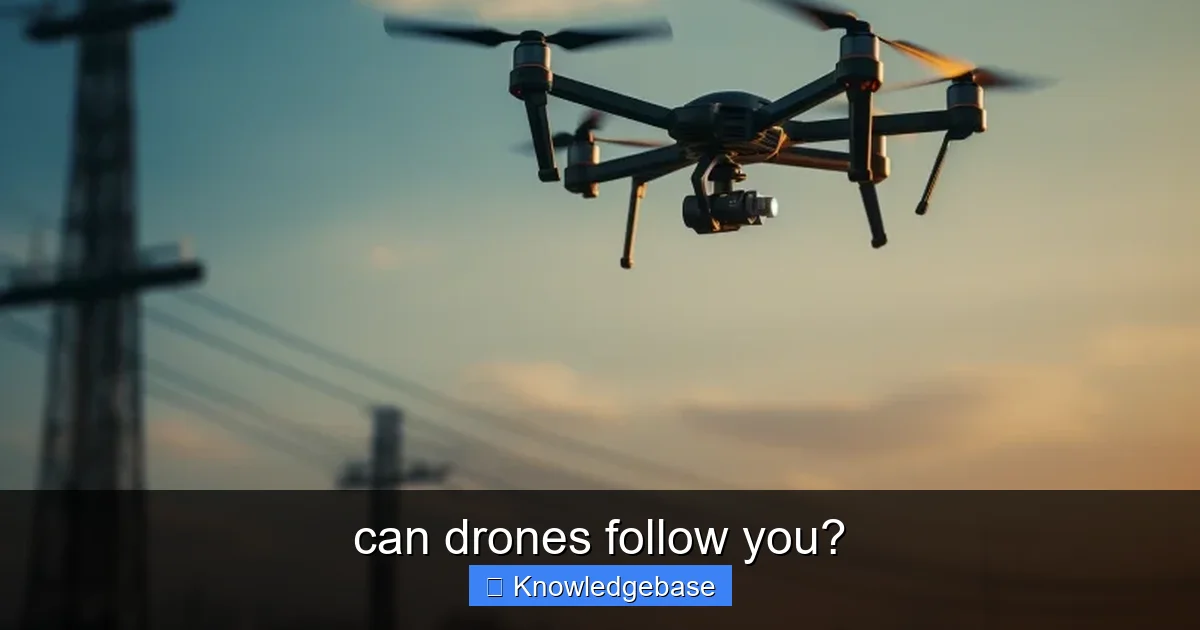
Featured image for this comprehensive guide about can drones follow you?
Image source: droneller.com
In a world increasingly populated by advanced technology, the presence of drones has become a common sight, from hobbyists capturing breathtaking aerial footage to commercial entities utilizing them for various operational needs. These unmanned aerial vehicles (UAVs) have revolutionized countless industries, yet they also spark a common question, often tinged with a mix of curiosity and concern: can drones follow you?
The short answer is a resounding yes, but the long answer is far more nuanced, diving deep into the capabilities of modern drone technology, the legal and ethical frameworks governing their use, and the practical implications for individual privacy. What might seem like a futuristic concept from a sci-fi movie is, in many instances, a present-day reality, albeit with specific limitations and purposes. Understanding how this tracking works, why it’s used, and what rights you have is crucial in our ever-evolving digital landscape.
This comprehensive guide will unravel the complexities behind drone tracking, exploring the sophisticated technologies that enable drones to follow subjects, the different types of drones equipped for such tasks, and the array of scenarios in which this capability is deployed. We’ll also delve into the critical aspects of legality and privacy, offering insights into regulations and actionable steps to protect your personal space. Join us as we demystify the fascinating, and sometimes unsettling, world of drone surveillance and autonomy.
Quick Answers to Common Questions
Can drones follow you automatically?
Yes, many modern consumer drones are equipped with an intelligent “follow me” mode, allowing them to track a person or object autonomously. It’s a popular feature for capturing dynamic footage!
How exactly can drones follow you?
They typically use GPS tracking from a remote controller or a visual tracking algorithm that locks onto a subject through their camera. Both methods enable the drone to intelligently keep pace.
Is it legal for drones to follow you everywhere?
Not necessarily. While “follow me” features are legal on the drone itself, flying drones over people without permission or in restricted airspace is often prohibited, so it depends on the specific situation and location.
Which types of drones can follow you?
This advanced capability is primarily found in mid-to-high-end consumer drones from popular brands like DJI or Autel. Entry-level models usually lack the sophisticated technology for autonomous following.
What should you do if an unknown drone appears to be following you?
If you feel an unknown drone is intrusively following you and invading your privacy, it’s advisable to move to a private area or contact local authorities to report your concerns.
📋 Table of Contents
- The Technology Behind Drone Tracking: How Do Drones Follow?
- Types of Drones Capable of Following & Their Applications
- The Legality and Ethics of Drone Following: Where Do We Stand?
- Real-World Scenarios: When Are Drones Following You (and Why)?
- Protecting Your Privacy: What Can You Do?
- The Future of Drone Tracking: Innovations and Challenges
- Conclusion
The Technology Behind Drone Tracking: How Do Drones Follow?
The ability of a drone to follow a subject isn’t a single, monolithic technology but rather a sophisticated integration of various sensors, software, and artificial intelligence. These systems allow drones to autonomously track moving objects, be they people, vehicles, or even other drones. Understanding these underlying mechanisms helps demystify how drones surveillance capabilities operate.
Learn more about can drones follow you? – can drones follow you?
Image source: 3dinsider.com
GPS Tracking & Waypoints
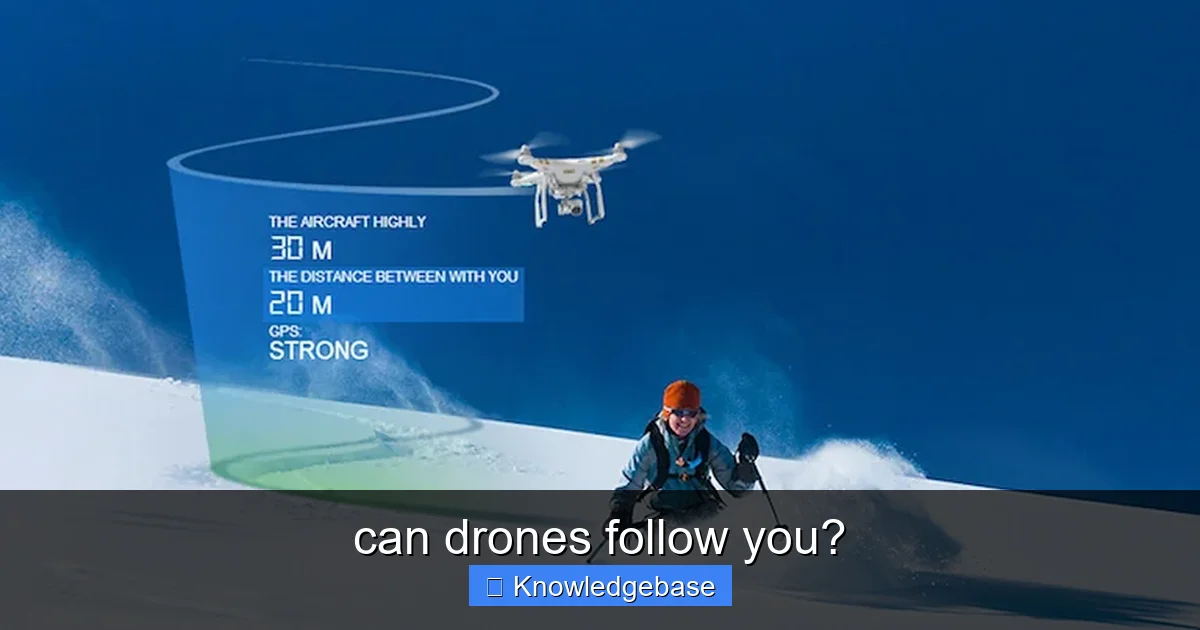
One of the most fundamental methods a drone uses to follow is through Global Positioning System (GPS). This technology allows drones to know their precise location in relation to a target’s GPS coordinates. Many professional and even consumer drones offer “follow me” modes that leverage GPS in conjunction with a connected smartphone or a dedicated GPS tracker. The drone simply maintains a set distance and altitude relative to the moving GPS signal.
| Tracking Method | Underlying Technology | Typical Accuracy & Range | Common Applications |
|---|---|---|---|
| Visual Object Tracking | AI-powered computer vision, real-time object recognition (e.g., person, vehicle). | High (up to 95% lock-on in clear view); effective range 10-60 meters; susceptible to occlusion, low light. | Action sports videography, vlogging, personal content creation, dynamic filmmaking. |
| GPS Signal Tracking (via paired device) | Drone receives GPS coordinates from a paired smartphone, controller, or dedicated beacon. | High (1-5 meter precision); range limited by drone’s control link (hundreds of meters to several km); requires active GPS signal. | “Follow Me” modes for hiking/biking, autonomous flight paths, long-range tracking of moving targets. |
| RF/Bluetooth Beacon Tracking | Drone follows the signal strength or direction of a small radio frequency (RF) or Bluetooth beacon. | Moderate (2-10 meter precision); shorter range (e.g., 10-100 meters); useful indoors or where GPS is weak. | Tracking pets, small assets, indoor navigation, proximity alerts, specific individual tracking in controlled environments. |
| Manual Piloting | Human pilot uses remote control (often with FPV) to actively track and keep a subject in frame. | Highly dependent on pilot skill and drone’s control range (up to several kilometers); offers highest adaptability. | Professional film production, specialized surveillance, search & rescue, complex aerial maneuvers, dynamic event coverage. |
- Principle: The drone receives GPS coordinates from its own module and from a connected device (e.g., a phone carried by the user). It then calculates the vector needed to maintain a pre-set relative position.
- Limitations: Requires clear GPS signal, less effective indoors or in urban canyons, subject to GPS spoofing or signal loss. Not truly “following” a visual target, but rather a GPS beacon.
Visual Tracking (Computer Vision)
Perhaps the most impressive and intuitive method for a drone to follow is through visual tracking, powered by advanced computer vision algorithms. This technology allows the drone to “see” a target and maintain it within its camera’s frame, adjusting its flight path accordingly.
- Object Detection: The drone’s onboard computer is trained to recognize specific types of objects (people, cars, animals) using machine learning models.
- Tracking Algorithms: Once an object is identified, tracking algorithms monitor its movement across successive video frames. These algorithms predict the object’s next position and instruct the drone to move to keep it centered or within a defined area of the frame.
- Real-time Adjustments: Drones with visual tracking capabilities can make real-time adjustments to speed, altitude, and direction to maintain a lock on the target, even if the target changes speed or direction unexpectedly. This is a core component when considering if can drones follow you effectively.
Object Recognition & Machine Learning
Building upon visual tracking, advanced object recognition powered by machine learning (ML) allows drones to identify and track specific individuals or types of objects with greater accuracy and persistence. Instead of just tracking any moving blob, ML models can distinguish between different people or objects, reducing the likelihood of losing the target or switching to another one.
- Training Data: ML models are trained on vast datasets of images and videos to learn patterns and features associated with specific objects or people.
- Predictive Analytics: These systems can not only track but also predict the likely movement of a target, allowing for smoother, more anticipatory drone movements.
- Adaptability: Advanced systems can adapt to changes in lighting, weather, and partial occlusions, making them incredibly robust for persistent drone tracking.
Advanced Sensor Integration (Lidar, Thermal)
Beyond traditional visual cameras and GPS, high-end drones, especially those used for commercial or military purposes, integrate other sensors to enhance their tracking capabilities.
- Lidar (Light Detection and Ranging): Lidar sensors create 3D maps of the environment using laser pulses. This allows drones to understand the depth and contours of the landscape, improving obstacle avoidance and target localization, particularly in complex environments where visual cues might be challenging.
- Thermal Imaging: Thermal cameras detect heat signatures, enabling drones to track objects or people even in complete darkness, through smoke, or dense foliage. This is particularly valuable for search and rescue operations or nocturnal drones surveillance.
- Radar: Some larger drones may incorporate mini-radar systems for long-range detection and tracking of moving objects, especially useful in adverse weather conditions where optical sensors are limited.
Types of Drones Capable of Following & Their Applications
The spectrum of drones capable of tracking ranges from consumer-grade models designed for casual filming to highly sophisticated military UAVs. Each category serves different purposes and employs varying levels of tracking autonomy and precision.

Learn more about can drones follow you? – can drones follow you?
Image source: wallpapercave.com
Consumer Drones (DJI ActiveTrack, Skydio RTH, Follow Me Modes)
The most accessible examples of drones that can drones follow you are found in the consumer market. Manufacturers like DJI and Skydio have popularized “follow me” modes, making sophisticated tracking available to the general public.
- DJI ActiveTrack: This feature, available on many DJI drones (e.g., Mavic series, Air series), uses computer vision to identify and track a chosen subject. Users simply draw a box around the target on their smartphone screen, and the drone will keep it in frame while flying autonomously. It offers various sub-modes like “Trace” (follow from behind, in front, or circling) and “Profile” (fly alongside).
- Skydio Autonomy: Skydio drones are particularly renowned for their advanced autonomous flight and tracking capabilities. Their drones build a real-time 3D map of their surroundings, allowing them to not only follow a subject but also to intelligently navigate around obstacles without user input. This makes them exceptionally adept at tracking dynamic activities like mountain biking or skiing.
- Generic “Follow Me” Modes: Many other consumer drones offer GPS-based “follow me” modes where the drone tracks the location of the controller or a connected smartphone. While less visually precise than ActiveTrack or Skydio’s autonomy, they are effective for basic tracking in open spaces.
- Applications: Vlogging, capturing action sports, personal event filming, hands-free aerial photography. These are designed for ease of use and creative content creation.
Commercial/Industrial Drones (Surveillance, Inspection, Delivery)
Beyond consumer fun, commercial and industrial drones leverage advanced tracking for serious business applications. Their capabilities often exceed consumer models in terms of payload, flight time, and sensor integration.
- Security and Surveillance: Drones equipped with high-resolution cameras (including thermal), powerful zoom lenses, and AI-driven object recognition are used by private security firms and organizations for perimeter patrols, monitoring large areas, and tracking suspicious activity. These drones surveillance operations can be programmed with predefined flight paths but can also autonomously track intruders.
- Infrastructure Inspection: Drones inspect power lines, pipelines, bridges, and wind turbines. Advanced tracking allows them to maintain a precise distance and orientation relative to a structure, even if it’s moving (e.g., a boat or train), ensuring consistent data capture for analysis.
- Logistics and Delivery: While still evolving, drones for package delivery (e.g., Amazon Prime Air, Wing) use highly sophisticated navigation and tracking systems. They can track a delivery location, autonomously fly to it, and often even track the recipient’s location for a safe drop-off.
- Agriculture: Drones track crop health, livestock, and irrigation systems, often following predefined paths or autonomously tracking specific farm equipment.
Military & Law Enforcement Drones (Advanced Persistent Tracking)
At the pinnacle of drone tracking technology are military and law enforcement UAVs. These systems are designed for persistent, long-duration surveillance, reconnaissance, and target acquisition, often in challenging environments.
- ISR (Intelligence, Surveillance, Reconnaissance): Military drones like the Predator and Reaper series are equipped with an array of sensors (EO/IR cameras, synthetic aperture radar) and advanced AI for continuous drone tracking of vehicles, individuals, and activities over vast areas for extended periods. Their tracking capabilities are far more robust, featuring advanced algorithms to maintain target lock even in complex, cluttered environments or during evasive maneuvers.
- Tactical Operations: Smaller, more agile drones are used by special forces and law enforcement for tactical surveillance, providing real-time intelligence by tracking suspects, monitoring crowd movements, or mapping dynamic situations.
- Facial Recognition & Gait Analysis: While controversial and often subject to strict legal limitations, some advanced military and law enforcement drone systems are capable of facial recognition and gait analysis to identify and track specific individuals from a distance.
- Counter-Terrorism & Border Security: These drones are deployed to monitor borders, track illicit crossings, and conduct intelligence gathering on potential threats, often utilizing thermal and multi-spectral sensors for day and night operations.
The Legality and Ethics of Drone Following: Where Do We Stand?
The ability of drones to follow you raises significant questions about privacy, legality, and ethical boundaries. As technology advances, regulatory bodies and societies are constantly playing catch-up to establish clear guidelines.
Privacy Concerns: Public vs. Private Property
The fundamental tension lies between the drone operator’s right to operate a drone and an individual’s right to privacy. This is often distinguished by whether the drone is operating over public or private property.
- Public Property: Generally, if you are in a public space (a park, street, public event), you have a reduced expectation of privacy. Drones filming in public spaces typically fall under similar rules as traditional photography or videography. However, persistent, targeted tracking of an individual in a public space can still raise privacy concerns, especially if it feels intrusive or harassing.
- Private Property: Flying a drone over someone’s private property without permission, especially at low altitudes, can be considered trespassing, invasion of privacy, or even harassment in many jurisdictions. Recording individuals in their homes or private yards without consent is almost universally illegal. The question of how high is “too low” varies, but generally, a reasonable expectation of privacy exists within and immediately surrounding one’s home.
- Data Collection: Beyond just visual tracking, drones can collect other data (thermal signatures, Wi-Fi signals, license plate numbers). The collection, storage, and use of this data present additional privacy challenges, especially concerning how it’s handled and who has access to it.
Regulations (FAA, GDPR, Local Laws)
Drone regulations are a patchwork of international, national, and local laws, all trying to define acceptable usage.
- Federal Aviation Administration (FAA) in the US: The FAA primarily regulates drone airspace. Rules like Part 107 for commercial operations dictate line-of-sight requirements, altitude limits, and restrictions over people. While the FAA doesn’t directly regulate privacy, it does regulate where and how drones can fly, indirectly affecting privacy. The “Remote ID” rule, for instance, aims to identify drones in flight, which could enhance accountability but also raises concerns about operator anonymity.
- General Data Protection Regulation (GDPR) in Europe: GDPR is a comprehensive data privacy law that applies to any organization handling personal data of EU citizens, including data collected by drones. If a drone collects identifiable images or data of individuals, GDPR principles of consent, data minimization, and secure processing apply. This significantly impacts how commercial drone tracking is conducted.
- Local & State Laws: Many states and municipalities have enacted their own laws regarding drone usage, particularly concerning privacy. These laws often restrict drone flight over private property, critical infrastructure, or at public events without permission. Some even specifically address drone surveillance or harassment.
Ethical Dilemmas & Public Perception
Beyond legality, the ethics of drone following and drones surveillance are a subject of ongoing debate.
- Mission Creep: The concern that technologies developed for one purpose (e.g., search and rescue) might be repurposed for more intrusive surveillance.
- Chilling Effect: The omnipresent possibility of being watched by a drone could lead to a “chilling effect” on public expression, assembly, and individual freedom.
- Bias in AI: AI systems used for object recognition and tracking can inherit biases from their training data, potentially leading to discriminatory targeting or misidentification.
- Accountability: When a drone is autonomously tracking, who is accountable if something goes wrong or if privacy is violated? The operator? The manufacturer? The AI developer?
Real-World Scenarios: When Are Drones Following You (and Why)?
The applications for drone tracking are diverse, ranging from benign personal use to critical public safety operations. Understanding these scenarios helps to contextualize when and why drones surveillance or tracking might occur.
Personal Use (Filming Sports, Vlogging)
This is arguably the most common and least intrusive scenario where drones follow you. Hobbyists and content creators frequently use “follow me” modes for:
- Action Sports: Cyclists, skiers, surfers, and skateboarders use drones to autonomously capture dynamic footage of their activities, providing unique perspectives that would be impossible with traditional cameras.
- Travel Vlogging: Vloggers use drones to follow themselves through scenic landscapes, providing a personal touch to their travel videos without needing a dedicated camera operator.
- Personal Events: Family gatherings, hikes, or outdoor adventures can be captured from above, with the drone following designated individuals to document the experience.
Commercial Use (Event Coverage, Construction Monitoring)
Businesses are leveraging drone tracking for efficiency, safety, and data collection.
- Event Coverage: At concerts, festivals, or parades, drones might follow performers or key individuals to capture comprehensive aerial footage. This is often done with explicit permission and within designated flight zones.
- Construction Monitoring: Drones are programmed to follow construction vehicles or inspect the progress of building sites, often returning to specific waypoints or tracking equipment to ensure compliance and safety.
- Filmmaking and Photography: Professional cinematographers use tracking drones to follow actors, vehicles, or animals in movies, TV shows, and commercials, achieving complex shots with precision and fluidity.
Security & Surveillance (Law Enforcement, Private Security)
This is where the term “drones surveillance” becomes most relevant, often raising the highest privacy concerns.
- Law Enforcement: Police departments use drones for traffic accident reconstruction, crowd monitoring, search and rescue operations, and tracking suspects during pursuits. They provide a valuable aerial perspective, enhancing officer safety and situational awareness.
- Private Security: Companies use drones for patrolling large properties, industrial sites, or critical infrastructure. These drones can be programmed to follow suspicious individuals or vehicles identified by other sensors or by human operators.
- Border Patrol: Drones are used to monitor national borders, tracking individuals attempting to cross illegally, especially in remote or challenging terrains.
Emergency Services (Search and Rescue)
Drones with advanced tracking capabilities are invaluable tools for emergency responders.
- Search and Rescue (SAR): Equipped with thermal cameras, drones can quickly scan large areas to locate missing persons, especially at night or in dense foliage. They can track the heat signatures of individuals, guiding ground teams to their location.
- Disaster Response: Following natural disasters, drones can assess damage, identify trapped individuals, and track the movement of relief efforts, providing critical real-time information to incident commanders.
Protecting Your Privacy: What Can You Do?
While the pervasive nature of drone technology might seem overwhelming, there are practical steps and legal avenues available to individuals concerned about drone privacy and unwanted tracking.
Awareness & Observation
The first line of defense is awareness. Understanding your surroundings and recognizing the signs of drone operation can empower you to take appropriate action.
- Look Up and Listen: Drones, especially larger ones, are often audible. Pay attention to unusual buzzing sounds. Visually identify drones if possible.
- Identify Drone Types: Try to discern if it’s a small hobby drone, a larger commercial one, or potentially a law enforcement UAV. This can inform your response.
- Note Flight Patterns: Is the drone hovering aimlessly, or does it seem to be specifically tracking your movements? Is it flying over public land or directly over your private property?
- Document Evidence: If you believe a drone is illegally tracking you, record its presence, direction of travel, and any identifying marks if visible. Note the date, time, and location.
Legal Recourse & Reporting
If you suspect illegal drone activity or an invasion of your privacy, there are avenues for reporting and seeking legal assistance.
- Contact Local Law Enforcement: If a drone is flying aggressively, harassing you, or clearly violating your privacy (e.g., hovering low over your private yard without permission), contact your local police department. Provide them with any documented evidence you have.
- Report to Aviation Authorities: For concerns related to airspace violations (e.g., flying too low, flying in restricted areas, operating unsafely), you can report to your national aviation authority (e.g., FAA in the US, EASA in Europe). While they may not handle privacy complaints directly, unsafe operation is their purview.
- Consult a Lawyer: If the drone activity is persistent, egregious, or leads to significant distress or damages, consulting a lawyer specializing in privacy law or property rights might be necessary. They can advise on cease and desist letters or civil lawsuits.
- Understand Local Laws: Familiarize yourself with local ordinances and state laws regarding drones and privacy in your area. Many communities have specific rules about drone usage that can be enforced.
Technological Countermeasures (Limited for General Public)
While there are technologies designed to counter drones, most are either illegal for private citizens, highly specialized, or impractical for individual use.
- No Jamming: It is illegal for private citizens to jam GPS or radio signals, as this interferes with legitimate communications and can endanger manned aircraft.
- Anti-Drone Guns/Nets: These are primarily for law enforcement, military, or critical infrastructure protection. They are expensive, require training, and are generally not available or legal for public use.
- Passive Defenses: Simple physical barriers like fences, tall trees, or privacy screens can offer some level of visual obstruction, though they won’t stop a drone from flying over.
- Data Protection: Be mindful of what personal data you share online, as this could potentially be used to identify you, though this is more about broader digital privacy than direct drone tracking.
The Future of Drone Tracking: Innovations and Challenges
The capabilities of autonomous drones and their tracking systems are constantly evolving, driven by rapid advancements in AI, sensor technology, and connectivity. This evolution brings both exciting possibilities and complex challenges for society and individual privacy.
AI & Autonomous Systems
The future of drone tracking lies squarely in more sophisticated artificial intelligence and fully autonomous systems. We can expect:
- Swarm Intelligence: Drones operating as coordinated swarms, collectively tracking multiple targets or maintaining continuous surveillance over large areas, sharing data and adapting in real-time.
- Contextual Awareness: AI-powered drones that not only track but also understand the context of what they’re observing, identifying unusual patterns of behavior or predicting intentions based on learned data.
- Edge Computing: More powerful onboard processors allowing drones to perform complex AI computations locally, reducing latency and reliance on cloud connectivity, making tracking even more immediate and persistent.
- Human-Machine Teaming: Drones working seamlessly with human operators, offloading routine tasks and providing enhanced situational awareness, allowing humans to focus on decision-making.
Counter-Drone Technologies
As drone capabilities grow, so too will the development of technologies designed to detect, identify, track, and mitigate unwanted or malicious drones. This includes:
- Advanced Detection Systems: Using acoustic, RF, radar, and optical sensors to identify drones from afar, even small ones.
- Sophisticated Identification: AI-driven systems that can classify drone models and potentially identify their operators through Remote ID signals or unique flight signatures.
- Non-Kinetic Mitigation: Technologies like GPS spoofing, signal jamming (legal for authorized entities), or cyber-takeovers to safely disable or redirect rogue drones without physical force.
- Ethical & Legal Mitigation: Developing policies and procedures that ensure counter-drone measures are used responsibly and without infringing on legitimate drone operations or individual rights.
Evolving Legal Frameworks
The rapid pace of technological innovation necessitates equally agile and forward-thinking legal and ethical frameworks. Key areas for development include:
- Harmonized Regulations: Greater international cooperation to establish consistent drone laws, especially for cross-border operations and data privacy.
- Privacy-by-Design: Encouraging drone manufacturers and software developers to incorporate privacy considerations into the design of their products from the outset.
- Accountability for AI: Developing clear legal standards for accountability when autonomous drones make decisions that lead to harm or privacy violations.
- Public Education: Continuous efforts to educate the public about drone capabilities, regulations, and their rights, fostering a more informed and balanced discussion about drone privacy.
The future will undoubtedly see drones become even more integrated into our lives. Balancing the immense benefits of this technology with the need to protect individual privacy and maintain public trust will be one of the defining challenges of the coming decades.
Conclusion
The question, “can drones follow you?” is definitively answered with a yes, underpinned by a fascinating array of technologies from GPS and computer vision to advanced AI and integrated sensors. From the consumer’s pursuit of the perfect action shot to a police force’s need for crucial intelligence, the ability of drones to autonomously track subjects is a well-established reality across various applications. This capability offers unprecedented opportunities for efficiency, safety, and creative expression, revolutionizing everything from filmmaking to search and rescue operations.
However, with great technological power comes significant responsibility. The rise of sophisticated drone tracking and drones surveillance capabilities inherently raises critical concerns about individual privacy, the boundaries of public and private spaces, and the ethical implications of persistent monitoring. Regulatory bodies worldwide are grappling with the challenge of creating frameworks that balance innovation with the protection of fundamental rights, resulting in a complex and often evolving landscape of laws.
As we look to the future, the advancements in autonomous drones and AI promise even more sophisticated tracking abilities, posing both immense benefits and new challenges. For individuals, understanding these technologies, being aware of your surroundings, and knowing your rights are paramount to navigating this new reality. For society, the ongoing dialogue between technological innovation and ethical governance will shape how we harness the power of drones in a way that respects privacy and fosters trust. Ultimately, while drones can indeed follow you, how they do so, and under what circumstances, will continue to be a reflection of our collective values and legal frameworks.
Frequently Asked Questions
Can drones follow you automatically?
Yes, many modern consumer drones feature “ActiveTrack” or “Follow Me” modes. These modes use computer vision and GPS to lock onto a subject and autonomously track their movement, keeping them in the frame.
What technology do drones use to follow a subject?
Drones primarily use a combination of GPS tracking and advanced computer vision algorithms. They can lock onto a person’s GPS signal (if transmitted) or more commonly, visually identify and track a subject based on shape, color, and movement patterns.
Is it legal for a drone to follow someone without permission?
The legality of a drone following someone without permission is complex and depends heavily on local laws regarding privacy, trespassing, and harassment. Generally, continuous or intrusive drone tracking, especially on private property, could be considered an invasion of privacy or harassment, even if flying in public airspace.
Are there specific drones designed for “follow me” features?
Absolutely. Many popular consumer drones from brands like DJI, Autel, and Skydio are equipped with sophisticated “Follow Me” or “ActiveTrack” functionalities. These features are often marketed towards content creators, adventurers, and sports enthusiasts who want to capture dynamic footage of themselves without needing a dedicated pilot.
What should I do if I believe a drone is following me illegally?
If you suspect a drone is following you illegally or intrusively, the first step is to document the incident, including the drone’s appearance, location, and time. You can then report it to your local law enforcement, who can investigate potential privacy violations or airspace infringements.
How far can a drone typically follow a person?
The effective following distance of a drone depends on its specific “Follow Me” technology and the environment. While some drones can maintain a lock on a subject up to several hundred meters away, obstacles, signal interference, and regulatory line-of-sight requirements for the pilot typically limit practical following distances to within a few hundred feet.