Ever dreamt of capturing stunning aerial footage that looks straight out of a Hollywood movie? DJI drones have revolutionized the world of videography, making professional-grade aerial filmmaking accessible to everyone from hobbyists to seasoned cinematographers. With so many fantastic models available, finding the best DJI drone for filming can feel a bit overwhelming.
But don’t sweat it! We’ve done the legwork for you, diving deep into DJI’s impressive lineup to highlight the top 7 contenders that excel in capturing breathtaking visuals. Whether you’re looking to shoot travel vlogs, action sports, cinematic landscapes, or simply elevate your social media content, there’s a DJI drone perfectly suited to your creative vision. Let’s unpack these aerial marvels and find your next filming companion!
1. DJI Mini 4K Camera Drone Combo

The DJI Mini 4K Combo is a fantastic starting point for aspiring aerial filmmakers and content creators who want top-tier video quality without the fuss. Its standout feature is its ultra-lightweight design, meaning you typically don’t need to register it with aviation authorities, making it incredibly convenient for spontaneous filming adventures. Paired with a robust 3-axis gimbal, this little powerhouse punches above its weight, delivering super smooth, cinematic 4K footage that’ll make your audience swoon.
Key Features:
– No Registration Needed – Under 249 g for recreational use.
– 4K Ultra HD & 3-Axis Gimbal for Cinematic Quality Shooting.
– 38kph (Level 5) Wind Resistant.
– 10km Max HD Video Transmission for clear, long-range viewing.
– Extended Battery Life (Combo offers 2 batteries for 62-min total flight time).
– Beginner-Friendly and Safe with one-tap takeoff/landing, GPS Return to Home (RTH).
– Intelligent QuickShots (Helix, Dronie, Rocket, Circle, Boomerang) for professional-level videos.
– Includes DJI Mini 4K, 2 batteries, DJI RC-N1C remote controller, shoulder bag, and more.
Pros:
– Extremely portable and lightweight, ideal for travel.
– Excellent 4K video quality for its size and price.
– 3-axis gimbal ensures highly stable and smooth shots.
– Long transmission range provides confidence during flight.
– QuickShots make complex cinematic moves easy for beginners.
Cons:
– Limited advanced obstacle sensing compared to higher-end models.
– DJI Fly app requires direct download from DJI website (not on Google Play).
– Still image quality might not match larger sensor drones.
User Impressions:
Users rave about the Mini 4K’s ease of use and impressive video quality for its small stature. Many highlight the peace of mind of not needing FAA registration and the convenience of the combo pack’s extra batteries for longer filming sessions. It’s often praised as the perfect entry-level drone for cinematic aerials.
Call to Action:
See it on Amazon here
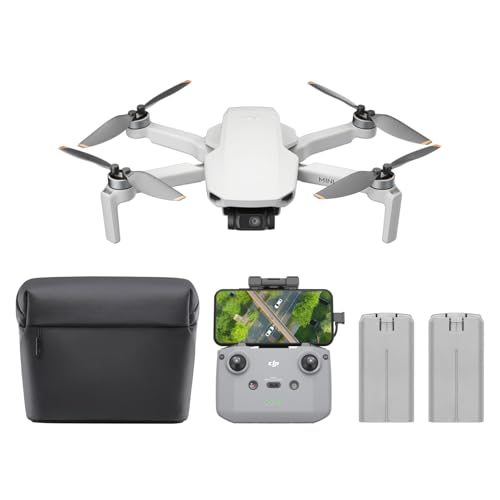
2. DJI Mini 4K Fly More Combo

When you’re serious about capturing more moments and minimizing interruptions, the DJI Mini 4K Fly More Combo is your go-to. Building on the strengths of the standard Mini 4K, this package supercharges your filming capabilities with extra batteries and essential accessories. That means significantly more flight time and less downtime charging, allowing you to fully immerse yourself in creative aerial videography without worrying about running out of juice. It’s the smart choice for those extended adventures or multi-shot projects.
Key Features:
– No Registration Needed – Under 249 g, no FAA registration or Remote ID for recreational use.
– 4K Ultra HD & 3-Axis Gimbal for Cinematic Quality Shooting.
– 38kph (Level 5) Wind Resistant.
– 10km Max HD Video Transmission.
– Uninterrupted Creation with Extended Battery Life (3 batteries for 93-min total flight time).
– Beginner-Friendly and Safe features.
– Boost Your Inspiration with Intelligent QuickShots.
– Includes DJI Mini 4K, 3 batteries, a two-way charging hub, shoulder bag, and more.
Pros:
– Triple battery setup vastly extends filming time.
– Two-way charging hub makes battery management a breeze.
– Shoulder bag provides convenient and safe transport.
– Maintains all the excellent features of the Mini 4K for cinematic footage.
– Great value for extensive recreational flying and filming.
Cons:
– DJI Fly app requires direct download from DJI website.
– Same limitations as the standard Mini 4K regarding advanced sensors.
User Impressions:
Customers absolutely love the extended flight time provided by the Fly More Combo, stating it makes a huge difference for truly capturing everything they want. The charging hub is a frequently mentioned convenience, ensuring batteries are ready for the next adventure. It’s considered the ultimate package for Mini 4K enthusiasts.
Call to Action:
See it on Amazon here
3. DJI Mini 4K, Drone with 4K UHD Camera for Adults
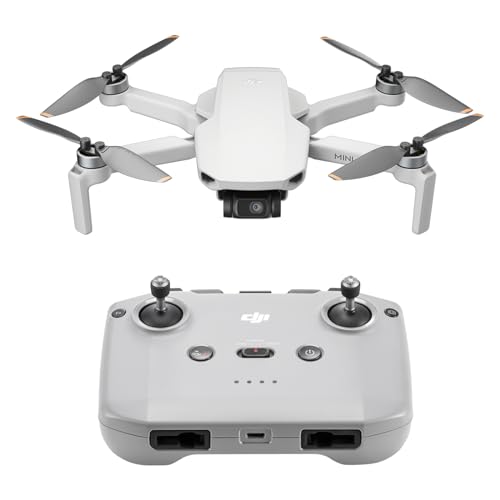
The base DJI Mini 4K package is perfect for those who want to dip their toes into the world of aerial filming without a significant upfront investment. It delivers the core experience of a high-quality, ultra-portable 4K camera drone straight out of the box. While it comes with one battery, it still provides ample flight time for quick shoots and allows beginners to get a feel for drone piloting and cinematic captures. It’s an affordable entry point to the best DJI drone for filming experience, especially for casual users.
Key Features:
– No Registration Needed – Under 249 g.
– 4K Ultra HD & 3-Axis Gimbal for Cinematic Quality Shooting.
– 38kph (Level 5) Wind Resistant.
– Standard 31-min Battery Life.
– Beginner-Friendly and Safe features like one-tap takeoff/landing and GPS RTH.
– Boost Your Inspiration with Intelligent QuickShots.
– Includes DJI Mini 4K, 1 battery, an RC-N1C remote controller.
Pros:
– Most affordable entry point into 4K DJI drone filming.
– Lightweight and portable for easy transport.
– Delivers excellent 4K video with stable gimbal.
– Intuitive controls ideal for new pilots.
Cons:
– Only one battery might limit longer filming sessions.
– DJI Fly app requires direct download from DJI website.
– No shoulder bag or extra accessories included in the base package.
User Impressions:
Beginners frequently praise this basic Mini 4K package for its simplicity and the impressive quality of footage it produces. They often note that it’s an excellent way to learn the ropes of drone flying and aerial cinematography before potentially investing in more accessories or advanced models.
Call to Action:
See it on Amazon here
4. DJI Avata 2 Fly More Combo (3 Batteries)

If you’re looking for an adrenaline-pumping, truly immersive filming experience, the DJI Avata 2 Fly More Combo is in a league of its own. This isn’t just a drone; it’s a ticket to a “first-person view” adventure, letting you capture incredibly dynamic and unique POV content. Its built-in prop guards mean you can zip through tight spaces with confidence, while the intuitive motion control makes even beginners feel like seasoned FPV pilots, ready to capture breathtaking action and cinematic stunts in stunning 4K/60fps.
Key Features:
– Unlock Adrenaline-Pumping Immersive Flying with prompt visual feedback through goggles.
– Intuitive Motion Control for effortless, natural drone movement.
– Easy ACRO for jaw-dropping flips, rolls, and drifts with minimal training.
– Tight Shots in Super-Wide 4K (155 FOV, 4K/60fps, 4K/100fps Slow-Motion).
– Built-in Propeller Guard for enhanced safety and durability.
– Hassle-Free POV Content with LightCut app templates.
– Includes drone, 3 Intelligent Batteries, DJI RC Motion 3, DJI Goggles 3, and more.
– FAA Remote ID Compliant.
Pros:
– Delivers an incredibly immersive and dynamic filming perspective.
– Perfect for capturing fast-paced action and unique POV shots.
– Built-in prop guards allow for safer flying in challenging environments.
– Easy ACRO modes enable cinematic tricks for all skill levels.
– High frame rates (4K/100fps) for stunning slow-motion effects.
Cons:
– FPV flying has a steeper learning curve for precise traditional cinematography.
– Goggles are essential for the immersive experience (included in combo).
– Battery life can be shorter in aggressive FPV flight.
– DJI Fly app requires direct download from DJI website for activation.
User Impressions:
Pilots are blown away by the Avata 2’s immersive experience and the thrilling footage it enables. Many highlight how easy the motion controller makes FPV flying, while advanced users appreciate the ACRO modes for complex shots. It’s universally praised for bringing a new dimension to aerial videography.
Call to Action:
See it on Amazon here
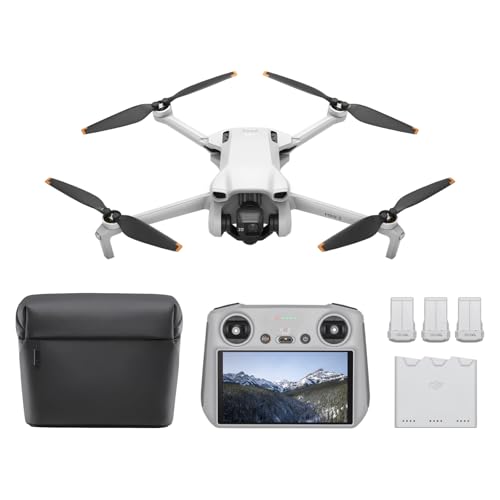
5. DJI Mini 3 Fly More Combo (DJI RC)

The DJI Mini 3 Fly More Combo with the DJI RC controller is a dream come true for social media creators and anyone wanting premium aerial videography in a compact package. Its standout feature is True Vertical Shooting, making your content instantly ready for platforms like Instagram and TikTok without annoying cropping. Add to that stunning 4K HDR, excellent low-light performance thanks to Dual Native ISO Fusion, and the convenience of the DJI RC with its built-in screen, and you’ve got a formidable tool for capturing and sharing your world from above.
Key Features:
– No Registration Needed – Under 249 g for recreational purposes.
– 4K UHD Stunning Imagery with HDR Video and Dual Native ISO Fusion.
– Striking Vertical Videos Ready to Share with True Vertical Shooting.
– Extended Battery Life (Fly More combo offers up to 114 minutes total).
– 38kph (Level 5) Wind Resistant and 3-Axis Gimbal for stable footage.
– 10km Max HD Video Transmission.
– Creative Features for Advanced Shots (QuickShots, Panorama).
– Beginner-Friendly and Safe (GPS RTH, Precise Hovering).
– QuickTransfer via Wi-Fi for fast downloads.
– Includes two additional Intelligent Flight Batteries, a Two-Way Charging Hub, shoulder bag, and the DJI RC with a built-in 5.5-inch HD display.
Pros:
– True Vertical Shooting is a game-changer for social media content.
– Exceptional 4K HDR and low-light performance for its class.
– DJI RC controller provides a seamless, phone-free flying experience.
– Extended flight time with the Fly More combo is excellent.
– Robust wind resistance ensures stable shots in various conditions.
Cons:
– Intelligent Flight Battery Plus (for 51min flight) makes it over 249g.
– Lacks advanced omnidirectional obstacle sensing of higher-end models.
User Impressions:
Filmmakers and content creators adore the Mini 3, especially for its vertical video capabilities and the convenience of the DJI RC. They frequently mention the noticeable improvement in image quality, particularly in challenging lighting, making it an ideal choice for vlogging and capturing diverse scenes.
Call to Action:
See it on Amazon here
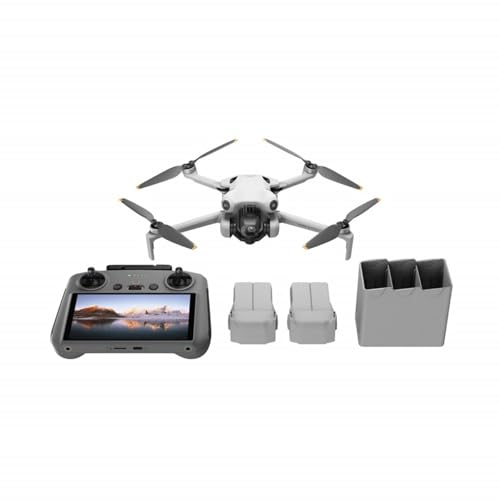
6. DJI Mavic 4 Pro Drone 512GB Creator Combo (DJI RC)
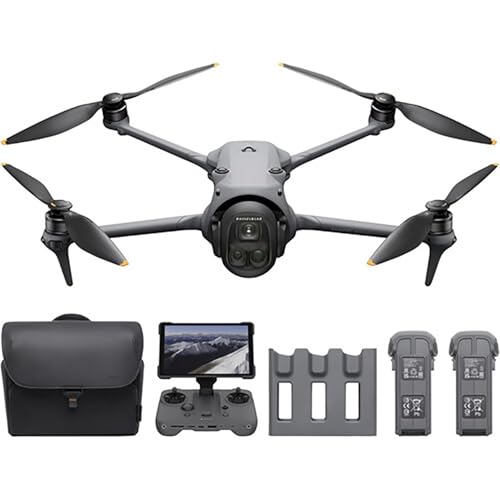
For the ultimate in professional aerial photography and cinematography, look no further than the DJI Mavic 4 Pro Creator Combo. This drone is an absolute beast, boasting an incredible 100MP Hasselblad camera with a large 4/3 CMOS sensor for unparalleled image quality, capable of 6K/60fps HDR video. With not one, but two telephoto cameras, a revolutionary 360° Infinity Gimbal, and advanced low-light vision, it’s designed for discerning creators who demand the very best. This is the drone you choose when every pixel matters, and cinematic freedom is non-negotiable.
Key Features:
– 100MP Hasselblad Camera: 4/3 CMOS sensor, 6K/60fps HDR video, ultra-detailed 100MP photos.
– Dual Telephoto Cameras: 1/1.3″ 48MP medium tele and 1/1.5″ 50MP tele lenses for versatile shooting.
– Infinity Gimbal 360° Rotation: Enables gravity-defying shots and dynamic Dutch angles.
– 0.1-Lux Nightscape Vision: Advanced omnidirectional obstacle sensing and LiDAR for safe flights in near-total darkness.
– 51-Minute Flight Time: High-capacity 95Wh battery for extended missions.
– DJI O4+ Transmission: Ultra-reliable 10-bit HDR live video feed up to 30 km.
– ActiveTrack 360° Tracking: Keeps subjects locked in cinematic focus.
– 4K/120fps Slow Motion Recording: Capture smooth, high-frame-rate footage.
– Up to 512GB Onboard Storage: Ideal for high-spec filmmaking.
– QuickTransfer with Wi-Fi 6: Transfer large files rapidly.
Pros:
– Unrivaled image and video quality with Hasselblad camera and dual telephoto lenses.
– Extensive creative control with 360° rotating gimbal.
– Superior low-light performance and obstacle avoidance for diverse environments.
– Exceptionally long flight time for demanding projects.
– Robust transmission ensures a stable, high-quality video feed.
– High frame rate options for professional slow-motion effects.
– Ample onboard storage and fast transfer speeds for efficient workflows.
Cons:
– Premium price point, a significant investment.
– Larger and heavier, requiring FAA registration.
– Might be overkill for casual users or beginners.
User Impressions:
Professional cinematographers are consistently blown away by the Mavic 4 Pro’s image fidelity, the flexibility of its multiple cameras, and the sheer power of its performance. They frequently cite the Hasselblad color science and the advanced safety features as key reasons for choosing it for high-stakes projects, making it a definitive contender for the best DJI drone for filming at the professional level.
Call to Action:
See it on Amazon here
7. DJI Neo, Mini Drone with 4K UHD Camera for Adults

The DJI Neo redefines portability and ease of use, making high-quality aerial filming accessible to virtually everyone, even those who might be intimidated by traditional drones. Weighing less than most smartphones, this ultra-compact drone is all about grab-and-go convenience. Its standout feature is the ability to fly controller-free, with options like palm takeoff and landing, voice control, or smartphone app control. For quick vlogs, family moments, or unique perspectives without the bulk, the Neo’s 4K ultra-stabilized video and subject tracking make it a surprisingly capable little filmmaker.
Key Features:
– Lightweight and Regulation Friendly – At just 135g, does not require FAA registration or Remote ID.
– Palm Takeoff & Landing, Go Controller-Free.
– Subject Tracking & QuickShots for effortless professional footage.
– Multiple Control Options: controller-free, voice control (EN/CN), mobile app, or RC.
– 4K Ultra-Stabilized Video with DJI stabilization technology and level-4 wind resistance.
– Full-Coverage Propeller Guards for worry-free indoor and tight-space flying.
– Standard package includes 1 Battery, Propeller Guards.
Pros:
– Extremely lightweight and highly portable (fits in a pocket!).
– No FAA registration required due to its tiny weight.
– Uniquely flexible control options, including hands-free.
– Great for quick vlogs, social media, and indoor flying.
– 4K video with good stabilization for its size.
– Full-coverage prop guards enhance safety for beginners and indoor use.
Cons:
– Limited flight time with a single battery.
– Range might be shorter than other DJI Mini series drones.
– DJI Fly app requires direct download from DJI website for activation.
– Lacks advanced features and robust sensors of larger drones.
User Impressions:
Users love the DJI Neo for its incredible portability and simplicity. It’s often praised as the perfect casual drone for capturing everyday moments, especially with its palm takeoff and subject tracking. Many find the controller-free options revolutionary for quick, spontaneous captures without any setup fuss.
Call to Action:
See it on Amazon here
FAQs: Finding Your Perfect Filming Drone
Q1: What makes a DJI drone “best for filming” compared to other brands?
A1: DJI drones are renowned for their industry-leading camera technology (often featuring Hasselblad or their own advanced sensors), superior gimbal stabilization for smooth footage, intelligent flight modes that simplify complex shots, and reliable transmission systems. These combined factors consistently deliver professional-grade cinematic footage and a user-friendly experience unmatched by many competitors.
Q2: Do I need to register my DJI drone with the FAA if I’m just filming for fun?
A2: It depends on the drone’s weight. Drones weighing under 249 grams (like the DJI Mini 4K, Mini 3, and Neo) generally do not require FAA registration or Remote ID for recreational use in the US. However, always check the latest local regulations and the FAA’s official website, as rules can change and vary by region and usage type. Heavier drones, like the Mavic 4 Pro, will require registration.
Q3: Is 4K video essential for aerial filming, or is 1080p enough?
A3: While 1080p HD can still look good, 4K UHD (Ultra High Definition) offers significantly more detail and flexibility. Filming in 4K allows you to crop, stabilize, or zoom in on footage during editing without losing quality, giving your videos a more professional and polished look. If you’re serious about videography, 4K is highly recommended.
Q4: What’s the difference between a “Combo” and “Fly More Combo” for DJI Mini drones?
A4: A “Combo” typically includes the drone, remote controller, and one battery. A “Fly More Combo” (or similar expanded bundles) provides additional accessories like multiple extra batteries (often two or three), a multi-battery charging hub, a shoulder bag, and sometimes spare propellers. This offers significantly extended flight time and convenience for longer filming sessions.
Q5: What are “QuickShots” and how do they help with filming?
A5: QuickShots are intelligent, pre-programmed flight maneuvers that allow your DJI drone to automatically capture complex, professional-looking video clips with just a few taps. Modes like Dronie, Rocket, Circle, and Helix make it easy for beginners to create dynamic and cinematic drone camera quality footage without needing advanced piloting skills.
Q6: Which DJI drone is best for beginners who want to film?
A6: For beginners, the DJI Mini series (Mini 4K, Mini 3, or Neo) are excellent choices. They are lightweight, easy to fly, offer robust stabilization and 4K video, and many don’t require registration. Features like GPS Return to Home and one-tap takeoff/landing make the learning curve very smooth for anyone just starting out in aerial filming.
Q7: How important is a 3-axis gimbal for stable video?
A7: A 3-axis gimbal is extremely important for achieving smooth, stable video footage. It physically counteracts the drone’s movements (pitch, roll, and yaw) in real-time, effectively isolating the camera from vibrations and bumps. Without a 3-axis gimbal, your footage would appear shaky and unprofessional, especially in windy conditions or during dynamic maneuvers, significantly impacting your cinematic footage quality.